The problem
Monitoring systems can detect a leak. Fixing it safely, with the right permits and the right technician, is a different problem.
Process control flags the issue, for example a detected leak in a specific zone, but someone still has to check technician certification, issue a digital work permit, and enforce safety steps before the fix can happen.
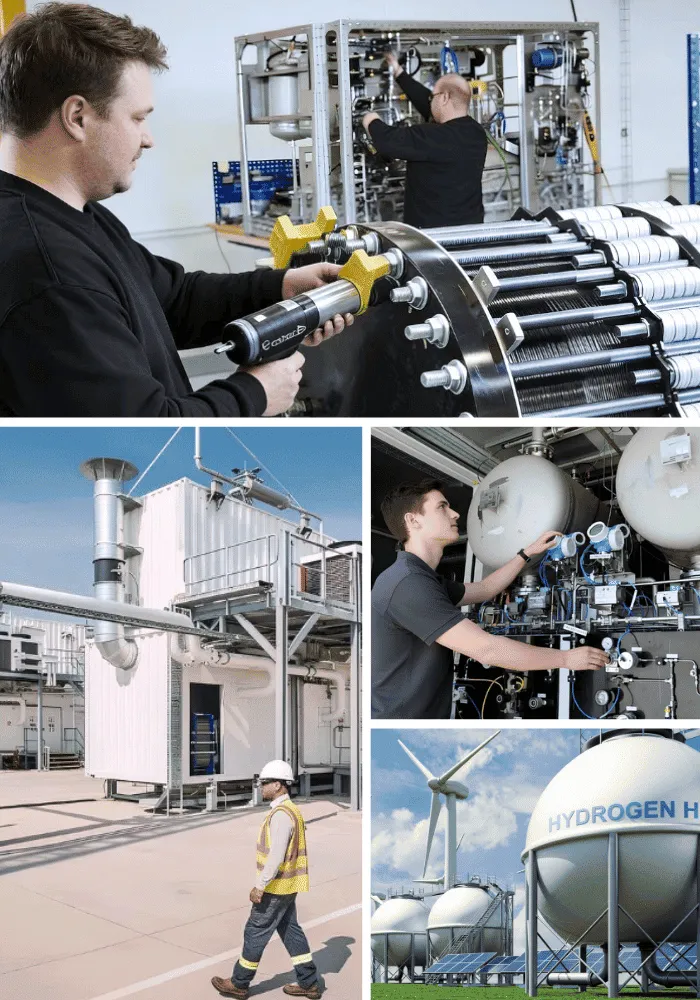
Electrolyzer OEMs managing full stack lifecycles and warranty validation, production facilities requiring rigorous process safety management, refueling station networks managing dispenser and compressor uptime, storage and distribution fleets with strict chain-of-custody requirements, and specialized O&M contractors doing high-risk work in hazardous zones all need the same rigor, applied differently.
Without knowing which van or warehouse holds a specific part, hazardous-zone repairs are delayed longer than they need to be.
Without a system requiring sign-off before work starts, protocols can be skipped under pressure.
Without a live view of how long a job has been open, response commitments slip.
Hydrogen leaks are invisible, and paper logbooks don't reliably enforce or prove compliance with process safety management standards.
Process safety setup, commissioning, routine operations and corrective maintenance each demand different checks, documentation and timing.