
.png)
.png)
In 2026, FacilityBot is the best local choice for commercial property management, while FieldEx leads as the best overall hybrid FSM/CMMS for multi-trade operations. Other top choices include global platforms like Fiix, UpKeep, and Limble CMMS.
The Singaporean industrial and real estate landscape is undergoing a massive digital transformation in 2026. Driven by the Built Environment Industry Digital Plan (BE IDP) and aggressive Industry 4.0 initiatives, the push toward smart, sustainable facilities has never been stronger.
However, managing high-density commercial real estate or strict manufacturing plants using fragmented WhatsApp groups and messy Excel spreadsheets is no longer viable. This reactive approach leads to costly equipment downtime, blown compliance audits, and severe safety risks. The solution? A modern computerized maintenance management system (CMMS) designed to automate your workflows and enforce strict regulatory safety.
Whether you are managing CBD skyscrapers or advanced manufacturing floors in Tuas, here is the ultimate guide to the 11 best CMMS platforms in Singapore for 2026.
Here’s a quick refresher you should check out before we dive deeper: What is CMMS software? Definition, Benefits, How it Works.
Buying software in Singapore comes with unique regional advantages and strict regulatory hurdles. Before evaluating platforms, every operations manager must understand these two critical factors:
The Singapore government actively co-funds digital transformation for local businesses. Eligible SMEs (with at least 30% local shareholding) can receive up to 50% funding support for pre-approved IT solutions. By checking the GoBusiness portal for pre-approved CMMS vendors, you can drastically subsidize your transition away from paper and spreadsheets, preserving your capital while modernizing your operations.
The Ministry of Manpower (MOM) enforces strict Workplace Safety and Health (WSH) regulations for high-risk maintenance tasks (eg working at heights, hot works, or confined spaces). A modern CMMS in Singapore must natively handle e-Permit to Work (ePTW) workflows. This ensures that mandatory safety checklists, digital risk assessments, and multi-level management signatures are fully executed before any technician is allowed to begin hazardous work.
Singaporean facility management is currently battling a severe manpower crunch.
Singapore’s highly specific, densely packed environment requires adaptable software. Here’s how top industries utilize modern CMMS platforms to transform their daily operations:
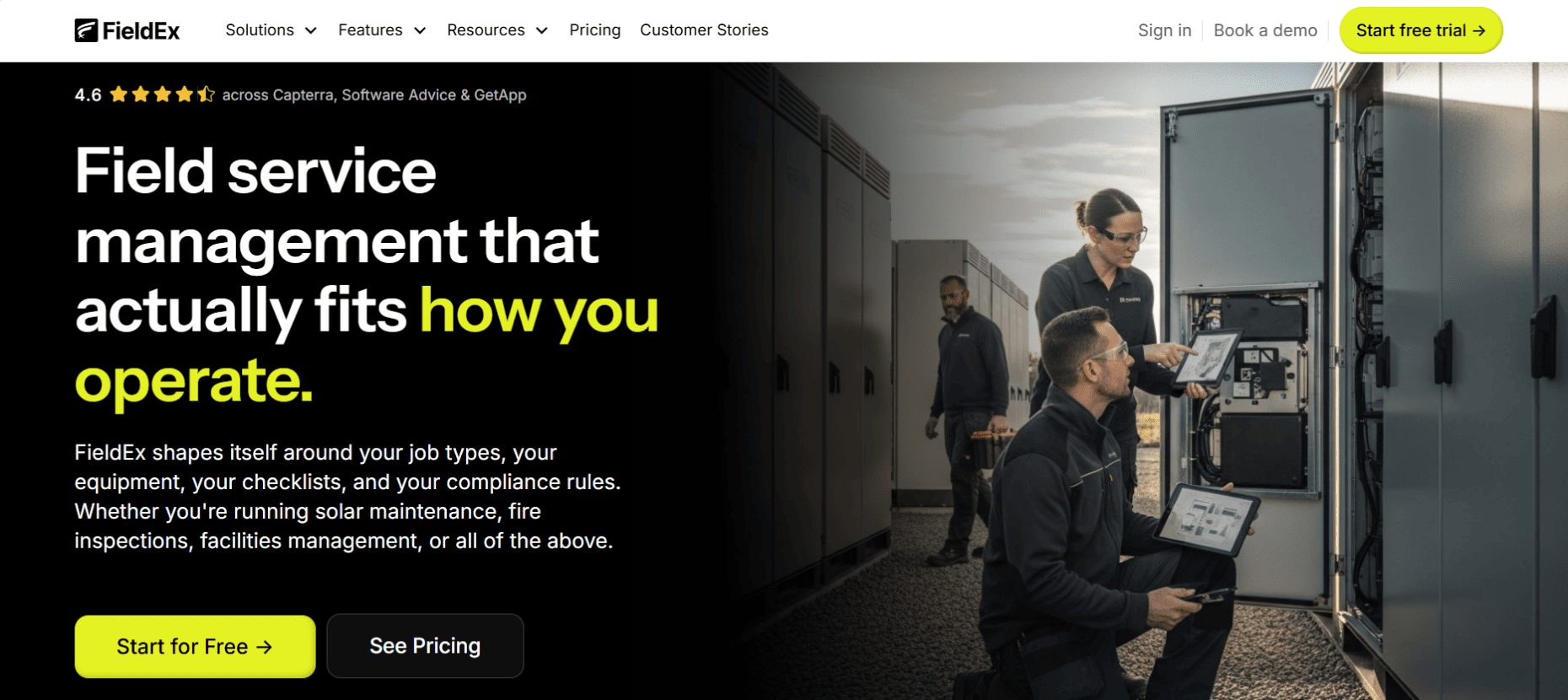
Bridging the gap between field service dispatching and heavy asset maintenance, FieldEx is the ultimate hybrid for companies managing both mobile workforces and complex on-site infrastructure.
Growing multi-trade businesses in Singapore across green energy, MEP, and construction that require end-to-end digital workflows.
The Regional Edge: Headquartered just across the causeway in Selangor, FieldEx shares the exact same time zone, business culture and language nuances as Singapore. This means you get a platform that thoroughly understands the Southeast Asian operational mindset, backed by immediate, highly relatable support that generic Silicon Valley software companies simply cannot match.
Plans & Pricing: Growth ($10/user/month), Pro ($55/user/month), Enterprise ($85/user/month).
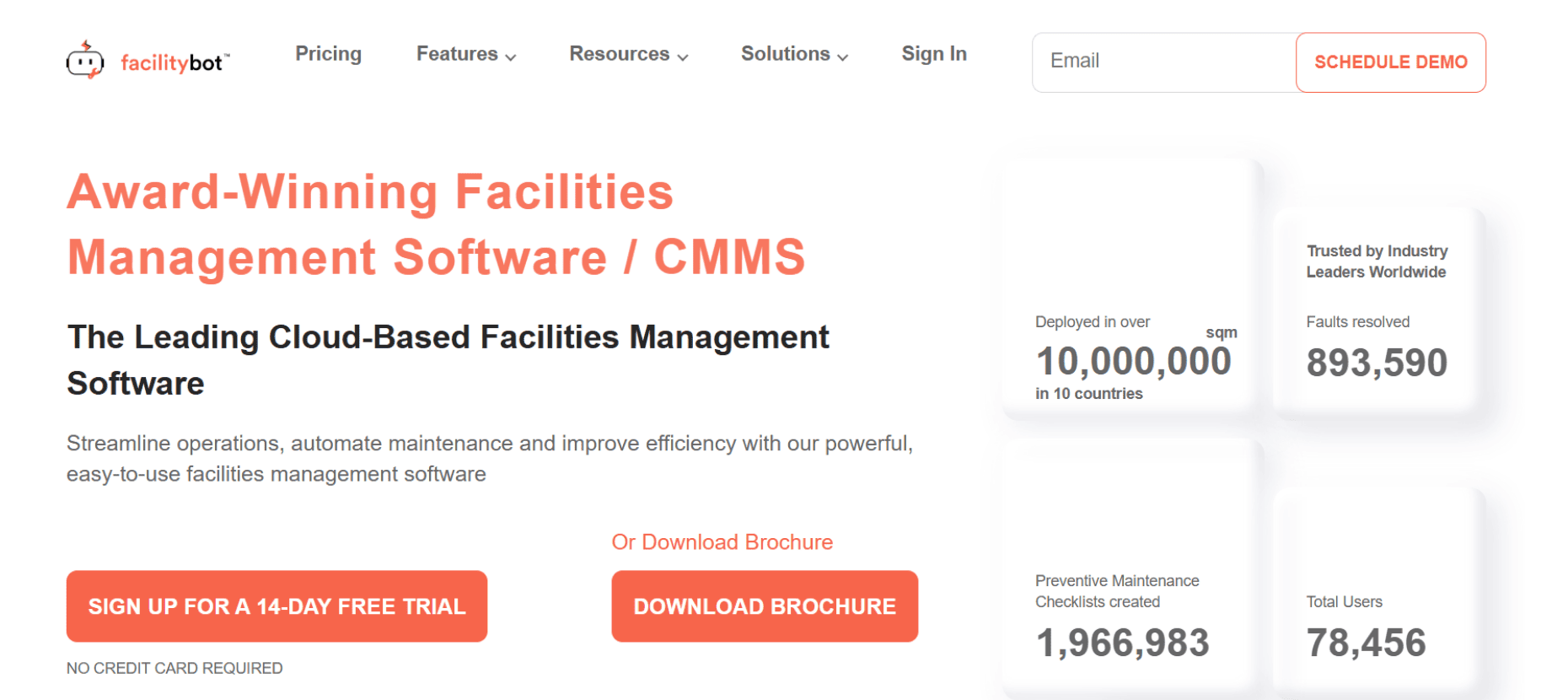
Born in Singapore, FacilityBot is widely recognized as a leading CMMS for local property managers and facility service providers. It is a pre-approved vendor for the PSG grant.
Commercial property managers and strata managers looking to streamline tenant communication and backend maintenance.
The Local Edge: It features a true Singapore-focused design, eliminating adoption friction for tenants in highly connected environments like the CBD.
Plans & Pricing: Basic – S$700 per mo (10 accounts) | Professional – S$1,375 per mo (25 accounts) | Plus – S$2,750 per mo (50 accounts)
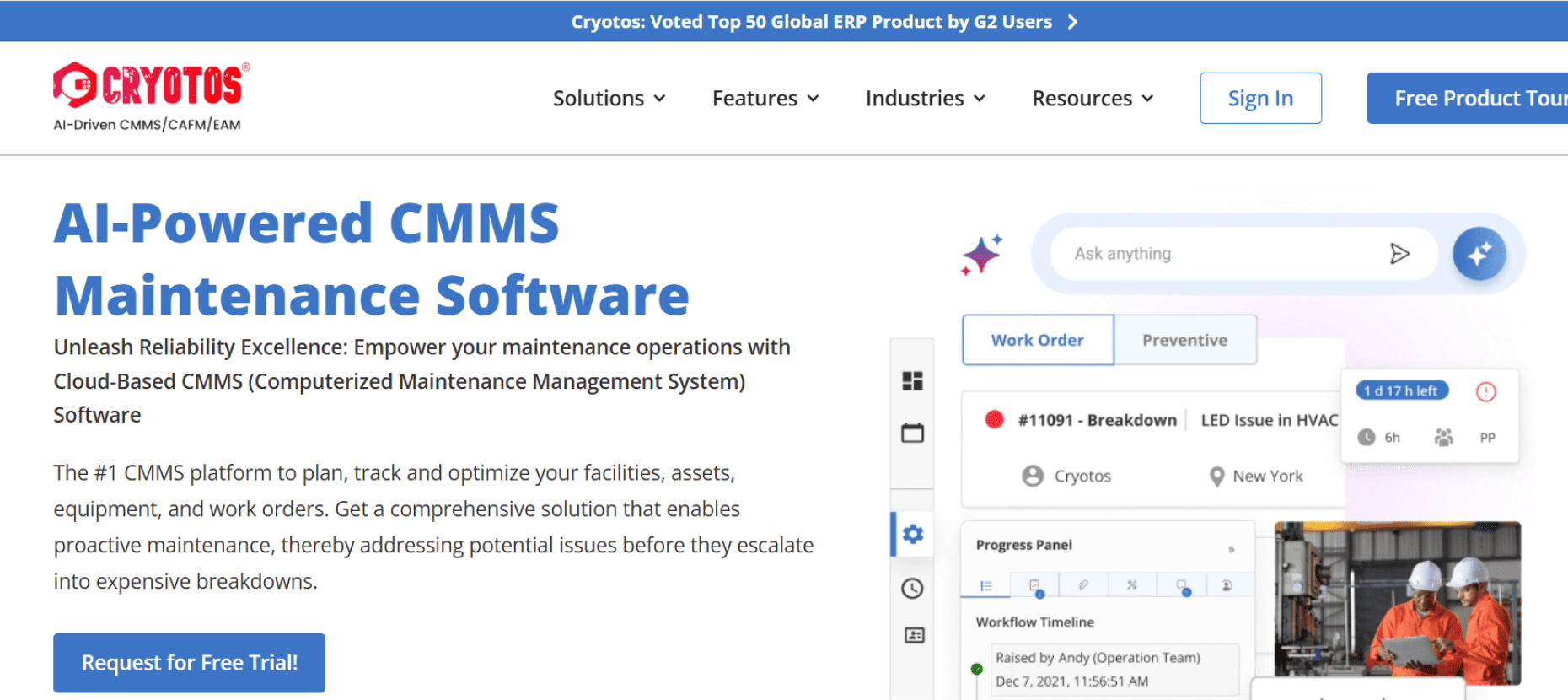
Cryotos is a comprehensive regional platform that unites maintenance, asset management, and field service management to drive operational efficiency.
Mid-to-large facility management firms needing a highly customizable workflow engine.
The Local Edge: Excellent for Singaporean contractors who need to bridge internal facility management with external vendor dispatching.
Plans & Pricing: Basic – S$29 per user/mo | Starter – S$39 per user/mo | Professional – S$69 per user/mo | Enterprise (custom pricing – contact Cryotos directly)
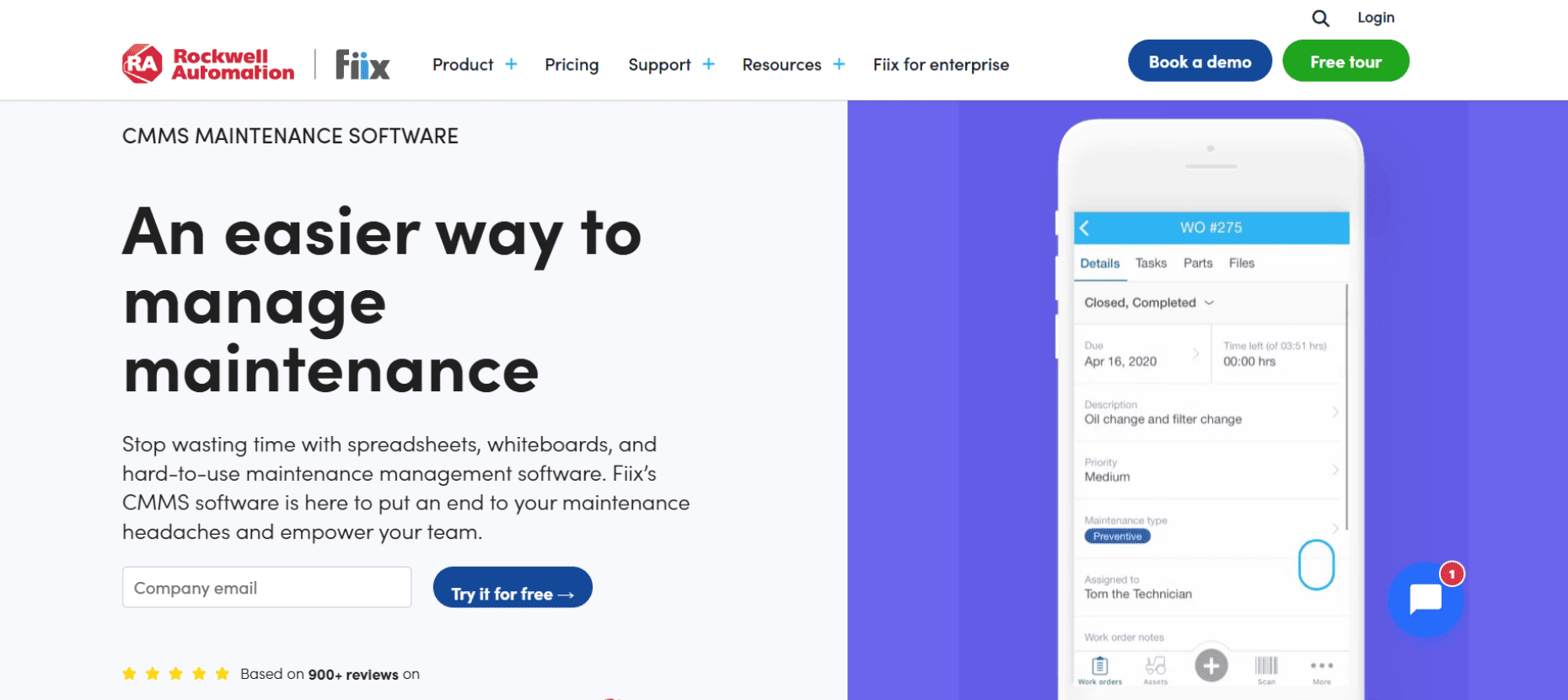
Fiix is a cloud-based powerhouse that optimizes maintenance planning, tracking, and measurement with deep IoT connectivity, backed by Rockwell Automation.
Enterprise-level manufacturing and industrial plants ready to leverage AI to predict machine failures.
The Global Edge: Highly favored by Singapore's advanced manufacturing plants in Jurong looking to transition from reactive to AI-driven predictive maintenance.
Plans & Pricing: Basic – $45 per user/month | Professional – $75 per user/month | Enterprise – Contact Fiix directly to know more.
.png)
IBM Maximo is a market-leading Enterprise Asset Management (EAM) and CMMS suite that uses a powerful combination of automation, IoT data, mobility and AI to move organizations away from reactive repairs and toward unified, condition-based maintenance.
Large-scale, asset-intensive organizations in Singapore – such as major aviation hubs, utility providers, and massive chemical or manufacturing plants – that require industry-specific data models and deep enterprise integration.
The Global Edge: Recognized globally as a leader by IDC and Verdantix, Maximo provides Singapore’s mega-facilities and state-owned enterprises with the heavy-duty predictive capabilities needed to optimize millions of dollars in lifecycle costs and support national green/sustainability initiatives.
Plans & Pricing: Custom pricing. Contact IBM directly for consultation.
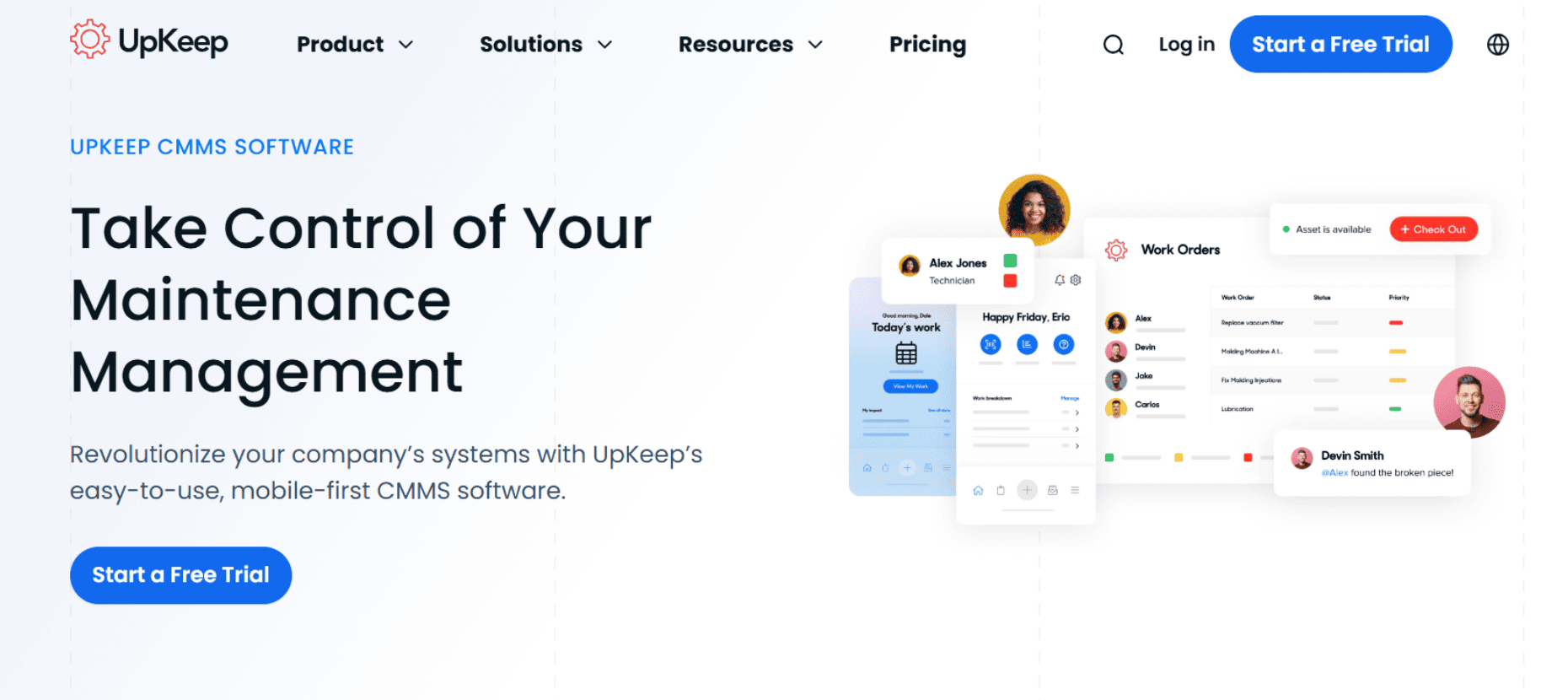
UpKeep is an AI-first, mobile-based solution that acts as a central command center for maintenance teams, delivering an app-like experience to heavy industry.
Fast-paced facility managers managing multiple distinct properties who want a highly intuitive, frictionless app.
The Global Edge: Sets the standard for modern facility managers who want a globally recognized, frictionless mobile experience.
Plans & Pricing: Essential – $20 per user/month | Premium – $55 per user/month | Professional & Enterprise – Contact UpKeep directly to know more.
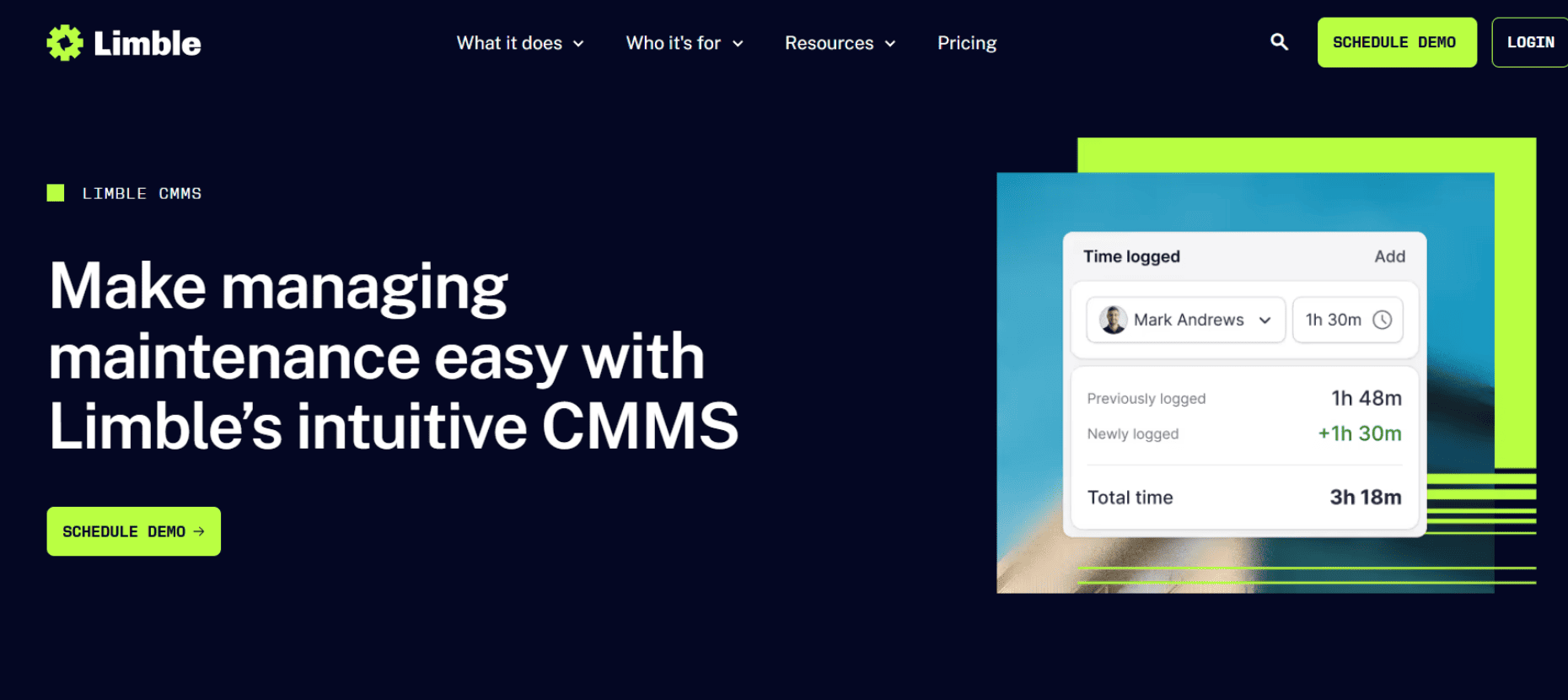
Limble CMMS is a highly intuitive, mobile-first software trusted globally to reduce downtime, specifically favored by executives for its ROI reporting.
Mid-to-large organizations that need to strictly track MTTR (Mean Time To Repair) to justify maintenance budgets to the C-suite.
The Global Edge: Designed to speak the language of finance just as fluently as the language of maintenance.
Plans & Pricing: Standard | Premium | Enterprise. Contact Limble CMMS directly to know more.
.png)
MaintainX is a mobile-first CMMS explicitly designed to empower the frontline workforce. It bridges the gap between the back office and the shop floor by replacing paper clipboards with a highly intuitive, chat-based digital workflow.
Fast-paced facility and manufacturing teams whose primary operational bottlenecks are poor internal communication, delayed work order updates, and a lack of real-time visibility across the shop floor.
The Global Edge: MaintainX sets the global standard for bringing world-class, instant mobile messaging directly into a structured, audit-ready maintenance environment, proving that enterprise software doesn't have to be clunky.
Plans & Pricing: Essential – $20 per user/month | Premium – $65 per user/month | Enterprise – Contact MaintainX directly to know more.
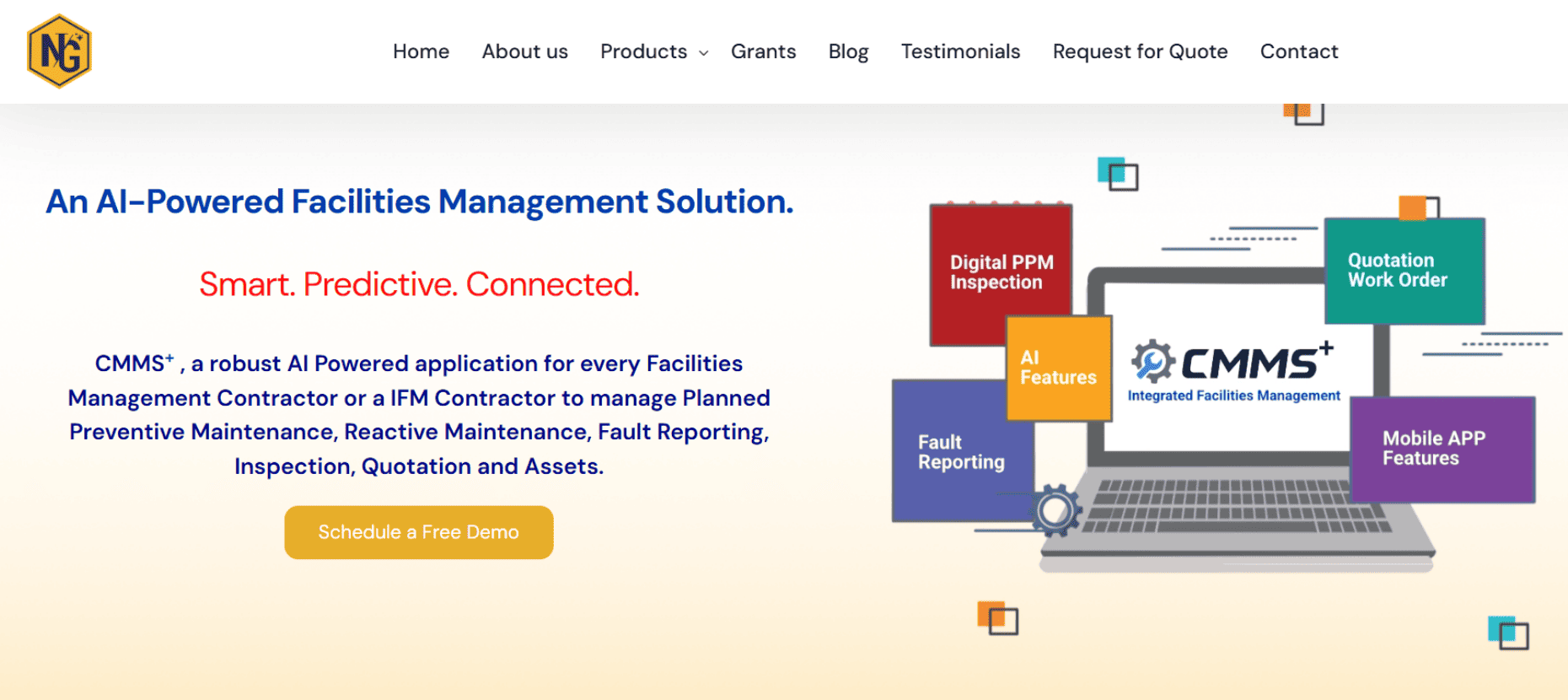
Developed by Singapore-based NewGene Technologies, NGT CMMS+ is a robust, AI-powered facility management platform built specifically to handle the complex quotation, preventive maintenance, and fault-reporting workflows of local Integrated Facilities Management (IFM) contractors.
Singapore-based IFM contractors, construction maintenance teams, and commercial facility managers who need to tightly link their on-site physical repairs with local billing and quotation standards.
The Local Edge: NGT is fully grounded in the Singaporean contracting reality. By natively handling local financial workflows like Final BQ claims and FSR quoting within the CMMS itself, it eliminates the massive administrative headache local vendors face when billing strict commercial landlords.
Plans & Pricing: Custom pricing. Contact NGT Singapore for a tailored quote.
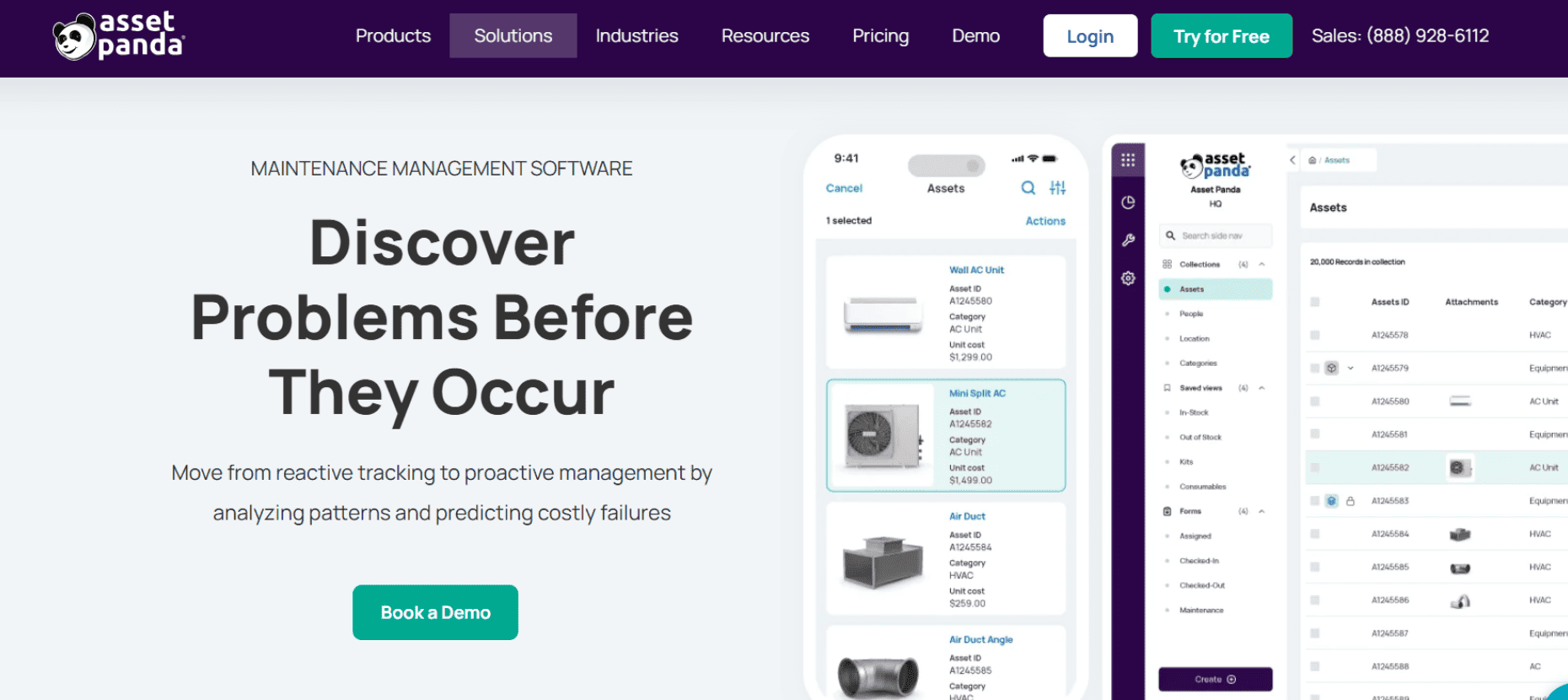
Asset Panda is a highly configurable, cloud-based platform that allows organizations to move away from reactive tracking to a fully proactive, custom-built maintenance schedule. It functions as a flexible database where you can track the exact lifecycle, repairs, and depreciation of your specific physical assets.
Organizations and mid-sized contractors that want total control over how their asset database is structured – requiring infinite custom fields and forms – without paying for rigid, heavyweight enterprise EAM software.
The Global Edge: Asset Panda offers the perfect middle ground for fast-growing businesses looking to replace messy Excel spreadsheets with a structured, compliant maintenance history that supports strict warranty tracking and safety regulations.
Plans & Pricing: Custom pricing. Contact Asset Panda for a quote.
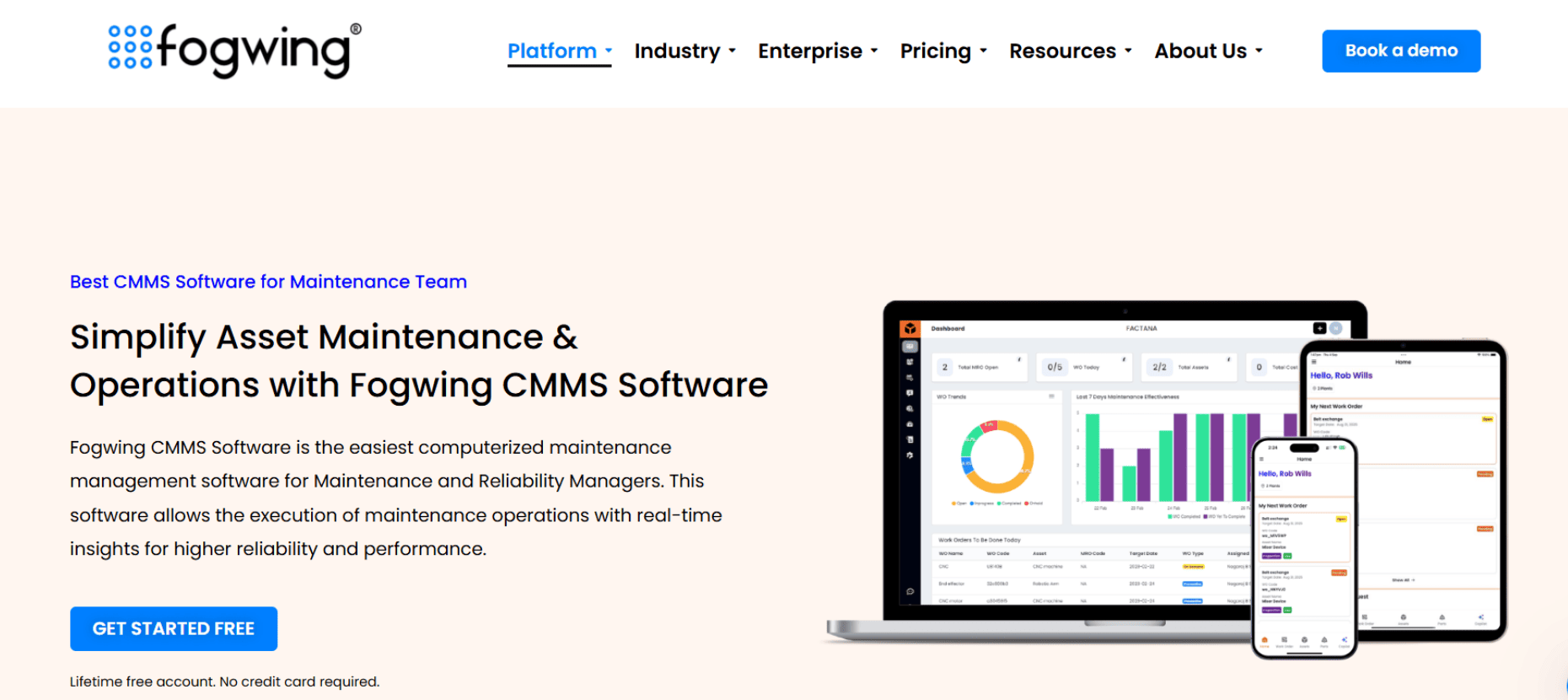
Fogwing Asset+ CMMS is cloud-based platform designed to bridge the gap between traditional facility management and Industry 4.0. It natively infuses Industrial IoT (IIoT) connectivity and Generative AI to automate work orders based on real-time machine health.
Mid-sized manufacturing plants, industrial automation facilities, and progressive commercial facility managers looking to transition to predictive, condition-based maintenance without a massive enterprise budget.
The Global Edge: Fogwing stands out by proving that you don't need a multimillion-dollar IBM budget to implement state-of-the-art predictive maintenance, AI-driven workflows and live sensor monitoring in your facility.
Plans & Pricing: Pro – $12 per user/month | Premium – $20 per user/month | Enterprise (custom pricing. Contact Fogwing directly)
Singapore’s real estate and industrial sectors heavily reward compliance, safety, and digital efficiency. Managing these complex environments with outdated spreadsheets is no longer just inefficient – it is a massive liability.
Whether you need seamless tenant engagement for commercial properties (FacilityBot) or heavy multi-trade asset management and field dispatching (FieldEx), transitioning to a modern digital platform is a baseline necessity to survive in 2026.
Stop risking compliance failures, MOM violations, and bleeding maintenance budgets. Book a personalized demo today to future-proof your Singaporean facility operations and leave the spreadsheet chaos behind.
Yes. The Singaporean government provides the PSG to encourage digital transformation. If your business is an SME with at least 30% local shareholding, you can apply via the Business Grants Portal to receive up to 50% co-funding on pre-approved CMMS and IT solutions.
The Ministry of Manpower (MOM) requires an ePTW to ensure strict safety standards are met before high-risk work begins. It digitizes the approval workflow, ensuring that risk assessments are completed, safety gear is verified, and authorized managers provide digital sign-offs, significantly reducing workplace accidents and legal liabilities.
Yes. When foreign worker quotas restrict your ability to simply hire more headcount, you must rely on a digital force multiplier. A CMMS automates the administrative busywork – like map-based routing, inventory lookups and manual dispatching. By removing these bottlenecks, your existing workforce can increase their actual "wrench time" and complete up to 30% more work orders per day without burnout.
This depends entirely on the structure of your workforce and facility. If you manage a highly complex facility with tens of thousands of assets but operate with a lean, highly specialized in-house engineering team of five people, a "per-user" licensing model is incredibly cost-effective. Conversely, if your assets are limited but you rotate through dozens of external sub-contractors who all need access to the app to close tickets, a "per-asset" or unlimited-user model will prevent your software bills from skyrocketing.
The golden rule of software migration is: Do not migrate garbage. Before touching the new software, audit and clean your existing data. Standardize your asset naming conventions and establish clear parent-child asset hierarchies. Enterprise-grade CMMS vendors will provide dedicated bulk-import templates and assign a local implementation specialist to ensure your data is mapped flawlessly before the system goes live.
A CMMS should never operate as an isolated data silo. The highest-intent buyers prioritize three integrations:
Technician pushback is the number one reason software rollouts fail. To guarantee adoption, the mobile app must require fewer steps than writing on a piece of paper. Look for platforms with zero-training, consumer-grade interfaces (like WhatsApp-style chat), robust offline capabilities for working in deep basement pump rooms, and voice-to-text dictation so technicians don't have to type out long reports with greasy hands.
While building an in-house app seems tempting for total control, it is almost always a financial trap. In-house builds carry massive hidden costs: managing server security, paying developers for constant bug fixes, and scrambling to update the app every time iOS or Android releases a new update. Buying a commercial CMMS allows you to leverage millions of dollars in continuous R&D and enterprise-grade security for a predictable monthly fee.
The best choice depends on your operational bottlenecks. Localized tools (like FacilityBot) are exceptional for regional compliance and integrating with local messaging habits. Global tools (like UpKeep or Fiix) offer mature mobile interfaces and enterprise-grade IoT connectivity. Hybrid platforms (like FieldEx) offer a powerful middle ground, providing global-grade features with the customizability needed to match local terminology.

.avif)


This website and its content are the property of FieldEx and are protected by copyright laws. © 2026 FieldEx. Any redistribution or reproduction of part or all of the contents in any form is prohibited, except with our express written permission.
FieldEx Pte Ltd Singapore