9 best agricultural contractor software solutions in 2026 (for fleet & field ops)
Tired of equipment downtime eating your profits? Explore the 9 best agricultural contractor software solutions to streamline maintenance, dispatching, and field ops.
TL:DR: Top agricultural contractor software comparison
Software
Primary Strength
Best For...
Key Feature
FieldEx
End-to-End Field Ops
Managing the full lifecycle of work, parts, and technicians.
Self-healing PM schedules and parent-child asset tracking.
Fleetio
Fleet Cost Tracking
Calculating total cost of ownership and fuel per engine hour.
Telematics integration and fuel card tracking for rolling assets.
Agworld
Agronomy Collaboration
Contractors focused on precision spraying and input applications.
Shared field records between farmer, agronomist, and contractor.
Traction
Accounting & Profitability
Modern, cloud-based financial tracking for North American farms.
Entity management and bank syncing for multiple business arms.
SUM-IT
Farm Administration
Tying field work directly into ag-specific bookkeeping.
Contractors Diary for seasonal job planning and automated invoicing.
UpKeep
Mobile Maintenance
Teams needing a simple way to log quick repairs and inspections.
User-friendly mobile app designed for high technician adoption.
FieldClock
Labor & Harvest Tracking
Managing large seasonal crews and piece-rate pay compliance.
H-2A compliance tools and mobile kiosks for dead-zone time tracking.
Farmbrite
All-in-One Farm ERP
Farmers who do a bit of contracting on the side.
Crop and livestock management combined with basic task tracking.
FARMDOK
Agronomy & Field Data
Contractors focused on precision spraying and planting.
GPS-based task recording and chemical compliance logs.
Running an agricultural contracting business is not for the faint of heart. You’re basically juggling a million moving parts – sometimes literally. Between managing expensive heavy machinery, coordinating a crew of field technicians spread across vast, remote farm territories, and racing against the ticking clock of harvest season, it’s a chaotic gig.
And if we are being completely honest? Relying on group text messages, greasy whiteboards, or dog-eared paper checklists to track equipment maintenance and dispatch your team is just a recipe for lost revenue. Paper gets lost in the cab of a truck, and texts get forgotten.
If you want to keep your tractors running, your technicians productive, and your clients happy, you need software. But not just any software. You need something that actually understands the dirt, the diesel, and the logistics of field service.
In this guide, we’re going to break down the top 9 agricultural contractor software solutions on the market right now. We’ll look at what they do, who they are for, and how they can make your life a whole lot easier.
What to look for in agricultural contractor software
Before we get to the list, let’s quickly talk about the alphabet soup of software acronyms you’re going to encounter.
You’ll hear terms like FSM (field service management) and CMMS (computerized maintenance management system).
FSM is all about the people and the work: dispatching technicians, routing them to the right location, and making sure they have the right forms to fill out.
CMMS is all about the machines: scheduling oil changes, tracking engine hours, and making sure your combine harvester doesn’t break down in the middle of a job.
For agricultural contractors, the sweet spot is finding a platform that does both. You want something with:
Robust Asset Tracking: The ability to track not just a tractor, but all its specific attachments.
Mobile Accessibility: Your team is in the field, often miles from a Wi-Fi router. They need a solid mobile app.
Preventive Maintenance: Tools that tell you to service a machine before it blows a gasket.
Alright, now let’s get into the top 9 contenders.
1. FieldEx
www.fieldex.com | Best Overall for Equipment Maintenance & Field Operations
FieldEx is a robust FSM and CMMS available on Android, iOS and web. It’s specifically built to help companies manage the full lifecycle of field service operations – from job creation and dispatching right through to on-site execution, compliance and documentation. Whether you’re fixing a broken pump or doing routine fleet maintenance, FieldEx is the central hub.
Key Features for Agricultural Contractors
Next-Level Preventive Maintenance: You can set up maintenance schedules based on elapsed time, meter readings (like engine hours), or a hybrid of both. It even has a "self-healing" feature: if a scheduled job becomes overdue, the system automatically reschedules it to a new date instead of leaving it perpetually overdue. (Because let's face it, sometimes the weather delays everything).
Multi-Level Asset Tracking: FieldEx supports parent-child asset relationships. This means you can track a massive piece of heavy machinery (the parent asset) and its individual, swappable components or GPS units (the child assets) separately for incredibly granular maintenance.
Your Lingo, Your Rules: The platform allows you to relabel system modules and fields so it matches the exact language your business uses. Don't like the word "Site"? Rename it to "Farm" or "Estate".
QR Code Magic: Every asset can have a QR code. A technician can scan it in the field to instantly open the equipment's full history. Even better, you can let farm operators scan it to report a fault without needing a login, automatically triggering a work order.
Mobile-First Execution: Technicians get a native mobile app where they can check in and out of tasks, log the spare parts they consumed, capture images, and generate a branded PDF completion document with a digital signature right there in the field.
Pros & Cons
Pros: Incredible automation (like round-robin dispatching that skips folks on vacation), deep inventory tracking, and strict compliance checklists that won't let a job close until mandatory steps are done.
Cons: Because it’s so feature-rich and structured, it might be a bit much if you’re a solo operator who literally just wants to send a quick invoice from your truck.
The Verdict:FieldEx is the absolute premier choice for growing agricultural contracting businesses that need a highly structured, automated way to track heavy equipment maintenance and manage a busy team of field technicians.
2. Fleetio
fleetio.com | Best for Pure Fleet & Vehicle Management
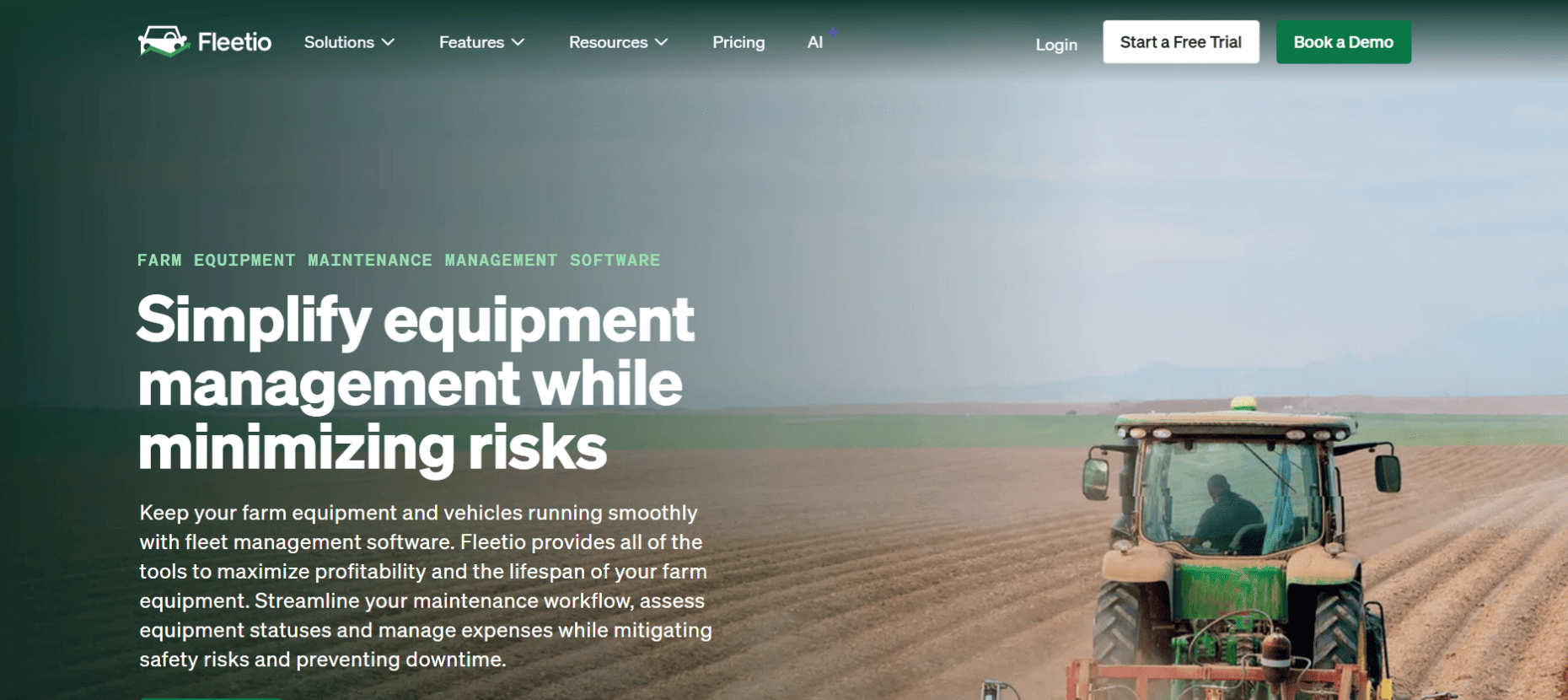
Fleetio is a specialized fleet management software designed entirely around keeping vehicles and heavy machinery running smoothly while tracking every dime spent on operations.
Key Features for Agricultural Contractors
Deep fuel tracking and cost-per-mile (or cost-per-hour) calculations.
Preventive maintenance workflow management specifically tailored for rolling assets.
Integrated parts and inventory tracking specifically for your shop or garage.
Pros & Cons
Pros: Unbeatable when it comes to tracking the total cost of ownership for a fleet of trucks or tractors. It also plays really nicely with telematics devices (those GPS trackers you plug into the dashboard).
Cons: It’s heavily focused on the machines, not necessarily the business. It lacks the customer-facing tools, complex field job dispatching, and compliance checklists needed for complex service calls.
The Verdict: If your absolute biggest headache is tracking the fuel, tires, and repair costs of your fleet, Fleetio is a fantastic, highly specialized tool.
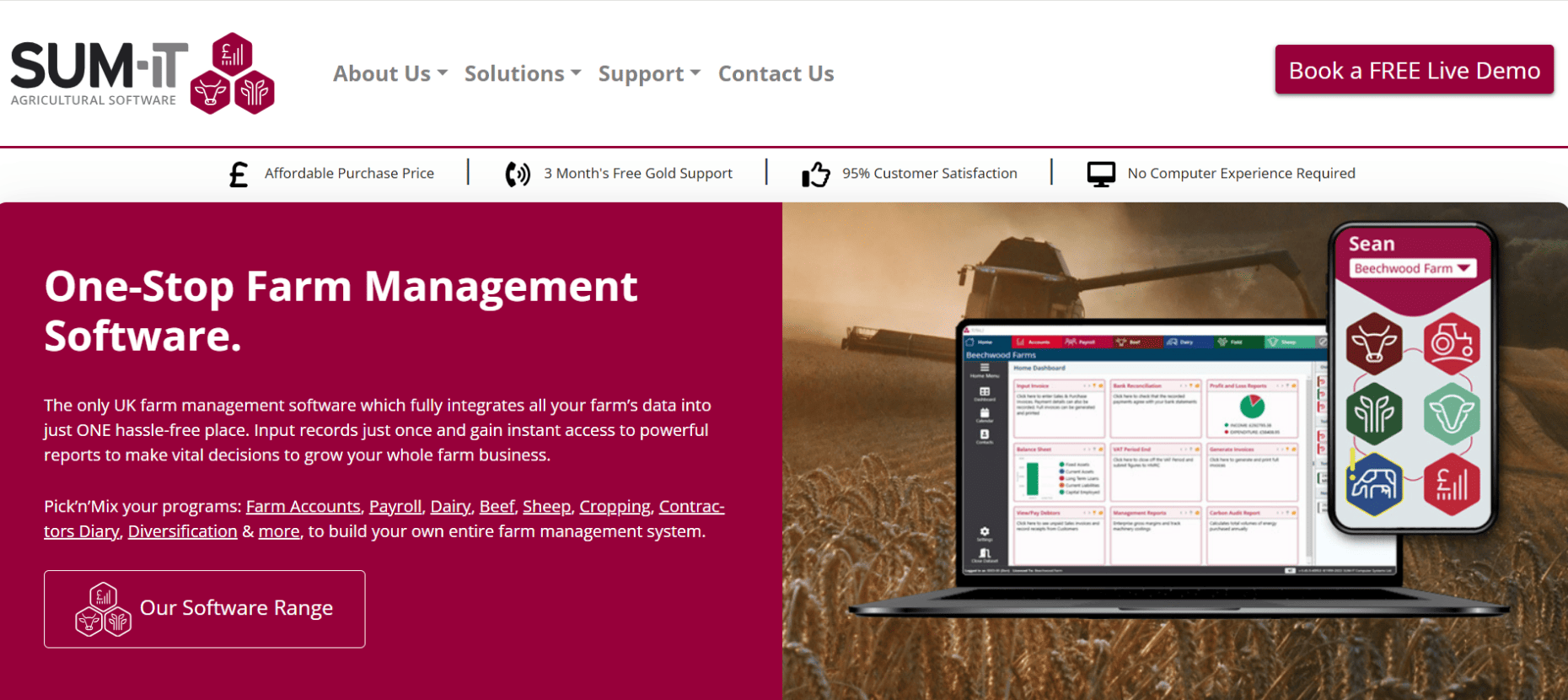
SUM-IT is a well-known name in the agricultural software world. Their "Total Contractors" module focuses heavily on the administrative side of the business – client records, automated invoicing, and tying it all into farm accounting.
Key Features for Agricultural Contractors
A centralized "Contractors Diary" to organize client records and plan out repeating seasonal jobs.
Automatic invoice generation directly from completed work.
Seamless integration with broader crop, livestock, and accounting modules.
Pros & Cons
Pros: It speaks the language of farm accounting fluently. It is brilliant for contractors who also run their own agricultural production operations on the side.
Cons: It’s a bit light on the actual mobile field service execution. It doesn't have the deep, granular mobile app capabilities for technicians doing complex mechanical work out in the mud.
The Verdict: This is perfect for contractors whose biggest bottleneck is administration, bookkeeping, and invoicing at the end of a long month.
4. UpKeep
upkeep.com | Best for Simple Preventive Maintenance & Safety Inspections
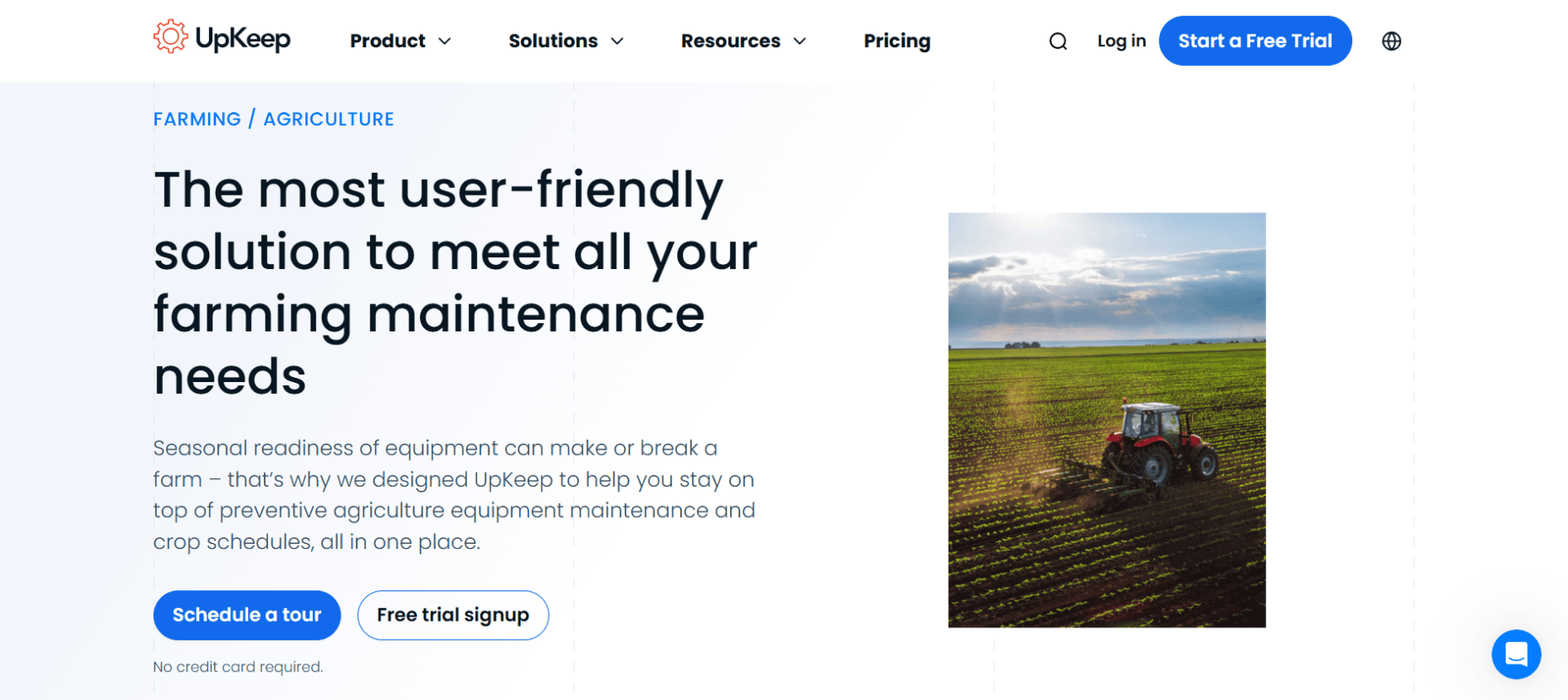
UpKeep is a mobile-first CMMS that is built to be incredibly user-friendly. It is designed to simplify preventive maintenance and quick equipment inspections to reduce downtime.
Key Features for Agricultural Contractors
A really intuitive mobile app for logging quick maintenance tasks and work orders.
Simple asset history tracking.
Basic inventory management for your shop supplies and spare parts.
Pros & Cons
Pros: The learning curve is basically flat. It has incredibly high adoption rates among non-technical farmhands who might be intimidated by clunky software.
Cons: It’s largely an internal tool. It lacks the robust FSM features – like client quoting, customer portals or complex dispatching – that a dedicated contracting business relies on to generate revenue.
The Verdict: A great entry-level CMMS if your goal is just to get your farmhands off paper maintenance logs, but dedicated contractors might outgrow it quickly.
Now for a quick tangent: what if you are a farm producer first, and a contractor second? Enter Farmbrite. This is an ERP (Enterprise Resource Planning), which handles everything from crops to livestock, with some equipment maintenance sprinkled in.
Key Features for Agricultural Contractors
Crop planning, yield tracking and deep soil records.
Basic task and work order management for farm staff.
Equipment and inventory tracking that works offline.
Pros & Cons
Pros: You get everything in one single dashboard. Animal health, soil samples, and tractor oil changes all live side-by-side.
Cons: The maintenance and dispatching features are pretty basic. It’s a jack-of-all-trades, master of none when it comes to hardcore field service.
The Verdict: The ideal pick if your contracting work is just a side hustle to your main farming operations.
6. FARMDOK
www.farmdok.com | Best for Field Data & Smart Farming Integration
FARMDOK is an agricultural app built heavily around smart farming and field data collection. It is highly favored by contractors who provide specialized agronomy services, spraying, or planting.
Key Features for Agricultural Contractors
GPS-based task tracking for accurate field recording.
Pesticide and fertilizer documentation to ensure legal compliance.
Easy calculation of services rendered for quick billing.
Pros & Cons
Pros: Unbelievably good at tracking what goes into the soil. It makes compliance reporting for spraying or planting a breeze.
Cons: Again, the focus is on the field and the crops, not necessarily the machinery or the heavy mechanical field service workflows.
The Verdict: If your contracting business is primarily focused on crop services (like spraying or harvesting) rather than heavy mechanical repair, FARMDOK is a stellar choice.
7. Agworld
www.agworld.com | Best for Agronomy & Precision Input Contractors
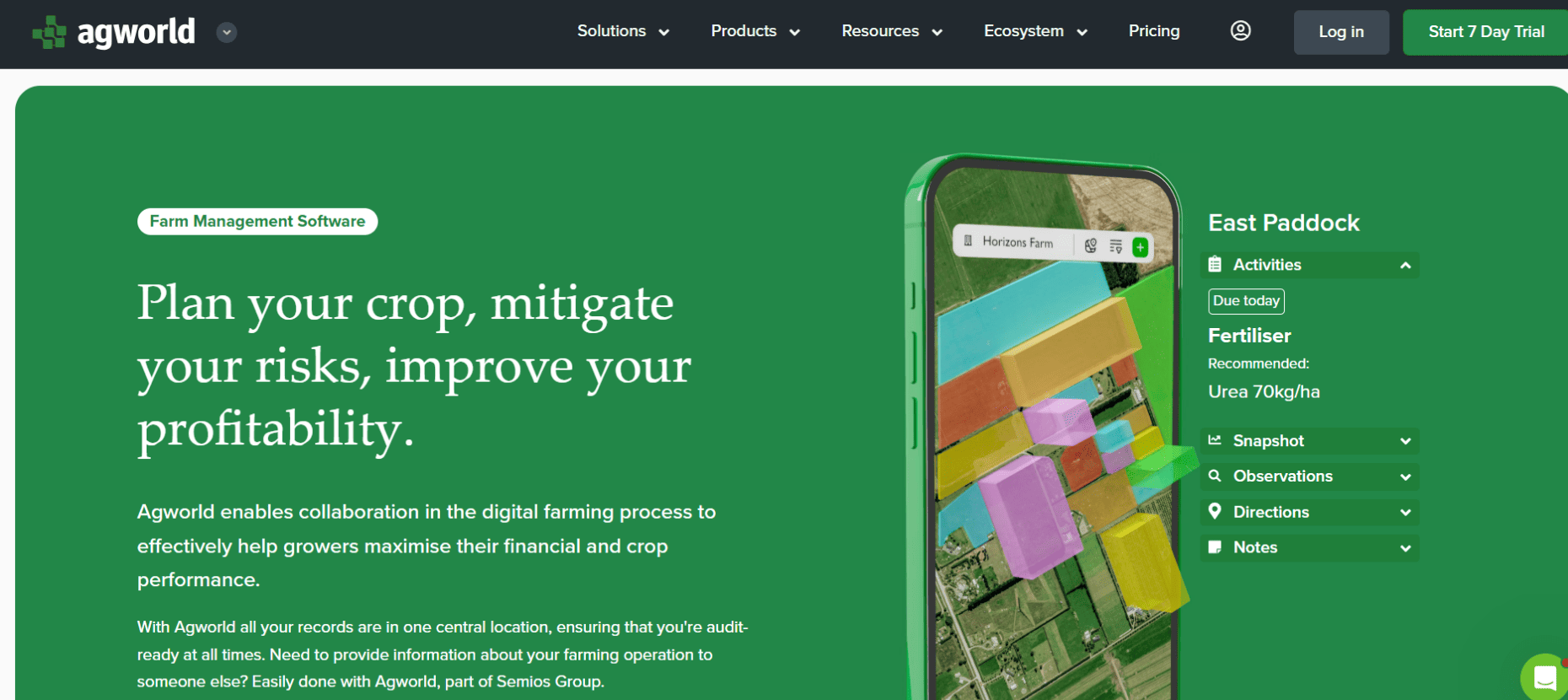
If your contracting business is less about fixing tractors and more about what goes into the soil, Agworld is a heavy hitter. It is a farm management platform that acts as a bridge between the farmer, the agronomist, and you – the contractor. It’s designed to keep everyone on the same page so that field recommendations don't get lost in translation.
Key Features for Agricultural Contractors
Real-Time Field Applications: You can perform and record field applications in real-time using a mobile app, even when you’re miles away from the office.
Streamlined Scouting Reports: The scouting app lets you create quick, professional reports on things like pest counts or crop health, which you can send to clients via email or text immediately.
Collaborative Planning: Because it’s a shared platform, you can see exactly what the agronomist has recommended for a specific field, ensuring you apply the right product at the right rate every single time.
Pros & Cons
Pros: Exceptional customer support and a very practical mobile interface that works well for people actually standing in a field.
Cons: It can sometimes take a bit of time to sync on mobile devices if you’ve been offline for a while, and it doesn't currently offer a Spanish language version for non-English speaking crew members.
The Verdict:Agworld is the "gold standard" for contractors who provide specialized spraying, spreading, or agronomy services and need to share data seamlessly with their clients.
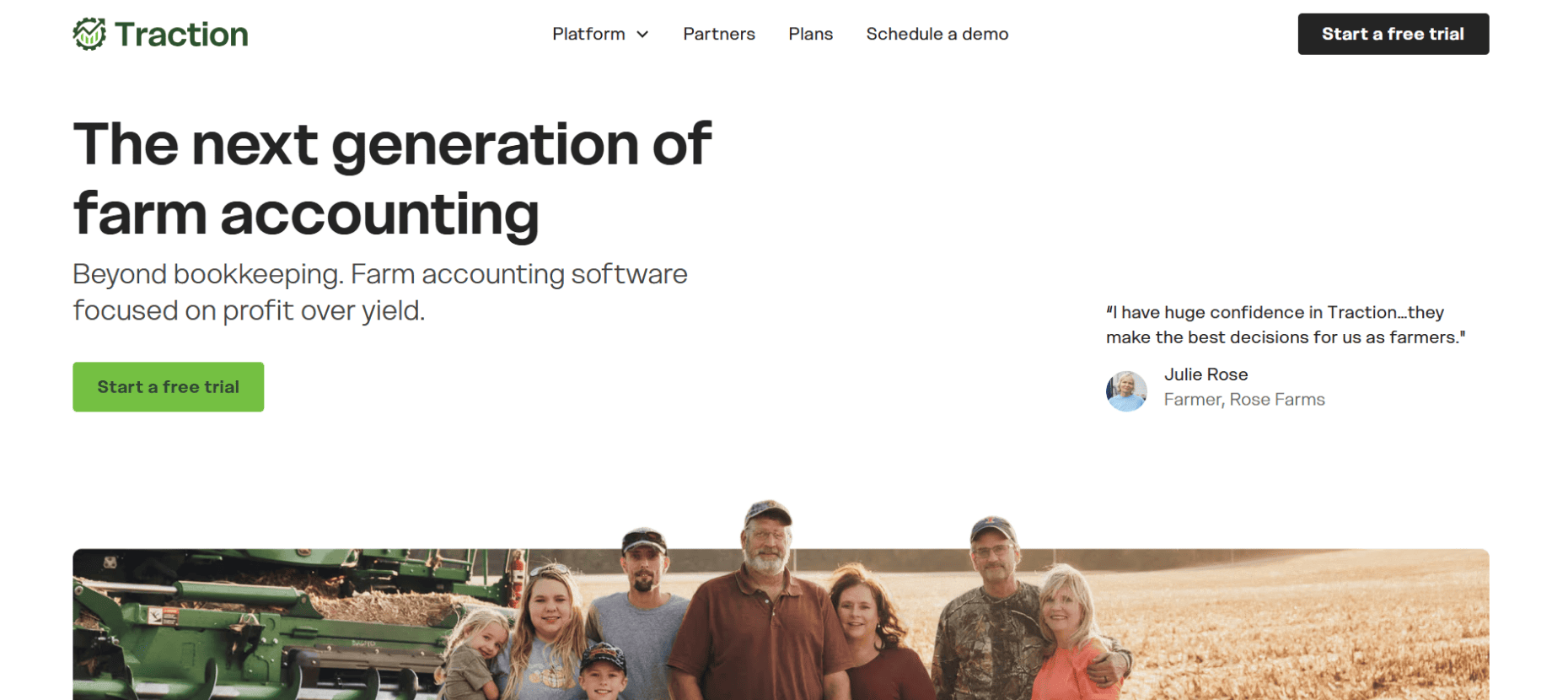
8. Traction
tractionag.com | Best for Modern Farm Accounting & Profitability
Traction is a relatively new player that has quickly become a favorite for North American contractors. Think of it as a "smart" accounting suite that actually understands that a farm is a business with unique needs – like tracking the cost of a specific commodity per acre or per bushel.
Key Features for Agricultural Contractors
Entity Management: If you run multiple business entities (like a farm and a separate contracting arm), Traction lets you manage them all in one spot with separate or combined financial reports.
Integrated Field Records: It ties your field operations (tillage, seeding, spraying) directly to your accounting, so you can see the real-time impact of every job on your bottom line.
Bank Syncing: You can connect your bank accounts for automatic transaction downloads, making that end-of-month "reconciliation" (which is just a fancy word for making sure your bank balance matches your books) a whole lot faster.
Pros & Cons
Pros: It offers true profitability tracking by field or even by bushel, and it’s very modern and cloud-based compared to older, clunkier accounting software.
Cons: Like any high-level accounting tool, it takes a serious time commitment to set up your "chart of accounts" (the categories you use to track money) at the beginning.
The Verdict:This is the tool for the contractor who wants to move beyond basic bookkeeping and really understand which jobs are making them the most money.
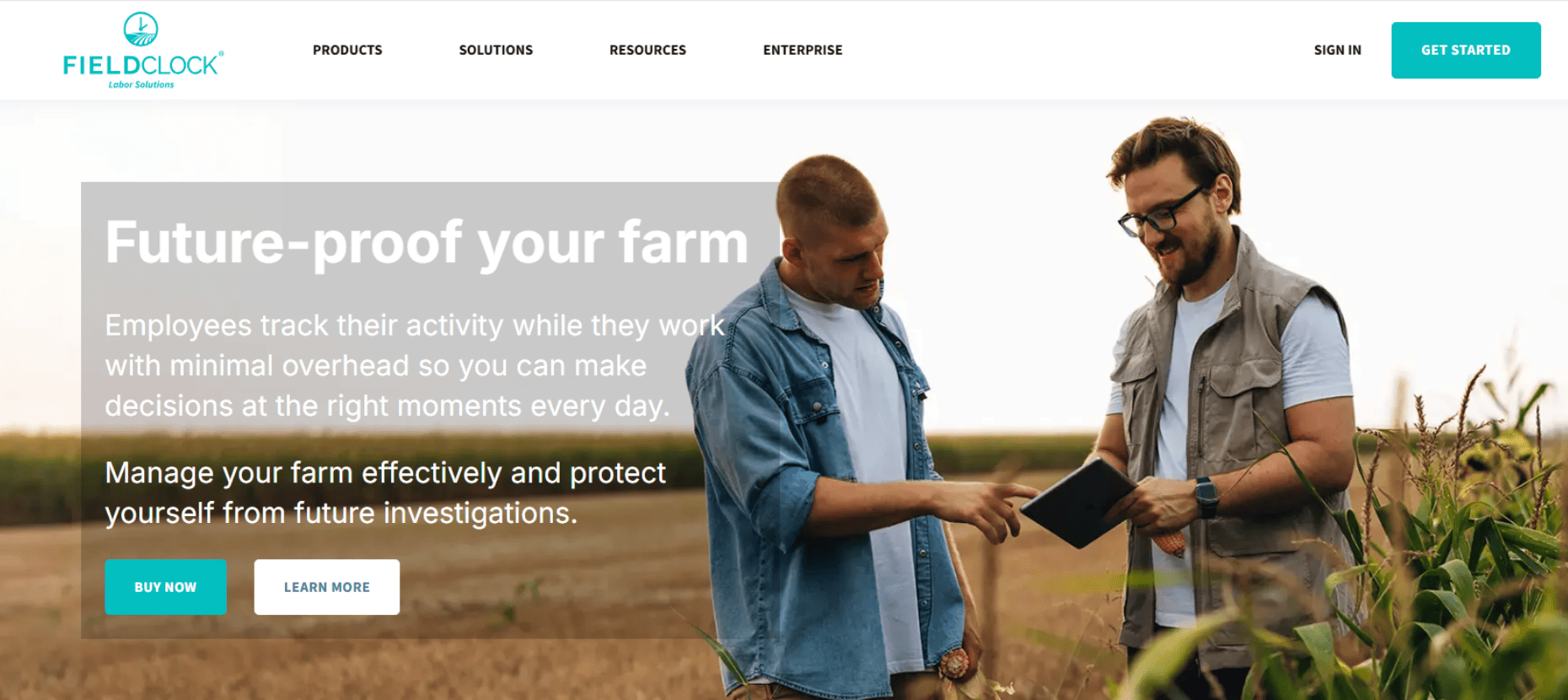
If your business is all about people – specifically large crews of seasonal workers – then FieldClock is going to be your best friend. It was built by farmers who were tired of paper timecards and "payroll leaks" (that’s when money disappears because of messy or inaccurate time tracking).
Key Features for Agricultural Contractors
Flexible Pay Styles: You can track labor by the hour, by the piece (piece-rate), or even by weight. It’s built to handle the complex way farm crews actually get paid.
H-2A Compliance Tools: For those dealing with the H-2A visa program, FieldClock tracks "Hours Offered" and helps you stay compliant with the "Three-Quarters Guarantee" (the legal requirement to offer at least 75% of the work promised in a contract).
Offline Mode & Kiosks: Your crew can log their time at a self-service kiosk or via a mobile app that works perfectly even in "dead zones" without cellular service.
Pros & Cons
Pros: It is incredibly intuitive and respects your workers' time by being fast and transparent. Plus, it exports data to over two dozen different payroll systems.
Cons: While it is a powerhouse for labor, it isn't designed to track tractor oil changes or manage your spare parts inventory.
The Verdict: If your primary headache is managing 50 people in an orchard and making sure their pay is accurate and legal, FieldClock is the modern way to do it.
Why is preventive maintenance important?
Let’s talk numbers for a second. According to a recent global study by ABB on industrial machinery, sudden equipment disruptions can cost businesses up to $500,000 per hour.
While your specific operation might not be losing half a million bucks every 60 minutes, the reality in agriculture is that the true cost of a broken machine is rarely just the mechanic’s bill. It is the ripple effect.
If a harvester blows a hydraulic line in the middle of a tight, weather-dependent harvesting window, you aren't just paying for a replacement hose. You’re paying for:
Idle farmhands who are sitting around waiting for the fix.
The potential loss of crop quality.
The sheer stress of scrambling to keep a client happy.
This is exactly why a system with rigorous preventive maintenance – which is just industry talk for scheduling regular servicing based on time or usage before a machine breaks down, rather than waiting for it to fail – is not just a fancy tech upgrade. It’s a literal insurance policy for your revenue.
When you are shopping around for a solution, keep an eye out for platforms that offer "self-healing" schedules. This means if a scheduled maintenance job becomes overdue by a configured amount of time, the system automatically reschedules it to a new date rather than leaving it perpetually overdue. That way, a routine check-up doesn't fall off the radar forever just because a heavy storm washed out the dirt roads on a Tuesday.
How to get your crew on board
You can buy the most expensive, feature-packed CMMS, but if your field technicians hate using it, you just bought a very expensive digital paperweight.
Mechanics and farm operators are practical people. They want to turn wrenches, not tap on a screen for twenty minutes trying to figure out how to close a work order. When choosing your software, ease of use has to be a top priority. The less friction your software has, the faster your team will actually adopt it, and the quicker you’ll get accurate data flowing back to the office.
To keep the shop-floor grumbling to an absolute minimum, look for software that adapts to your crew, not the other way around:
Speak Their Language: Find a platform where administrators can change the names of modules and fields throughout the system to match the language the business actually uses. If your crew calls a location a "Station" or an "Estate" instead of a generic "Site", you should be able to just change it in the system. It makes the software feel like it was built specifically for your team, not some corporate office in another time zone.
QR Code Magic: Your technician shouldn't have to squint at a greasy, faded 14-digit serial number and type it in manually. The best tools ensure every asset can have a QR code associated with it. The tech just scans the code to instantly open the asset record, view its details, history, and any open work orders. It is simple, it is fast, and it keeps everyone completely sane.
Why transitioning to a digital FSM/CMMS is critical now
If you’ve read this far, you probably already know that the old way of doing things isn't working anymore. The agricultural industry is getting more advanced, margins are getting tighter, and the machinery is getting more complex (and expensive!).
When a half-million-dollar combine goes down in the middle of a harvest, you can't afford to waste three hours figuring out which technician is closest, or whether you have the right spare part in the depot.
Transitioning to a proper FSM and CMMS platform ensures that work is structured, tasks are ordered, and checklists are actually completed. It protects your business from compliance liabilities and warranty disputes because you have a digital, time-stamped record of exactly what was done, by whom, and when.
And that’s a wrap!
While there are plenty of great tools out there for managing crops or doing payroll, managing the actual physical field service and complex equipment maintenance requires a specialized touch. If you’re looking for a system that bridges the gap between the office and the field, prioritize platforms that let your technicians capture signatures, log parts, and close out complex jobs right from their phones. The best solution for your business will be one that is highly customizable, easy for your crew to use, and built for the gritty reality of field operations.
Whether you choose a specialized maintenance tool or a broad farm management suite, the goal is the same: less downtime, better documentation, and a much smoother harvest season.
FieldEx is a B2B field service management software designed to streamline operations, scheduling, and tracking for industries like equipment rental, facilities management, and EV charging, helping businesses improve efficiency and service delivery.
Don’t just take our word for it
Hear from some of our amazing customers who used FieldEx
"If you want to solve your paper record problems and you want to digitize your operations and you want to elevate your customer experience go and use FieldEx"


.png)




.avif)

