
.png)
.png)
You’ve built a multi-trade business to capture more market share, but top-line revenue means nothing if operational chaos is eating your bottom line. It’s time to stop just "doing more jobs" and start extracting maximum value from every single dispatch.
How can a multi-trade business increase revenue? | A multi-trade business can rapidly increase revenue by cross-selling services to existing clients, converting break-fix emergency calls into recurring preventative maintenance contracts, and using unified field service management (FSM) software to eliminate costly operational leaks like wasted windshield time, unbilled inventory, and lost field follow-ups.
Acquiring new commercial clients is expensive. The fastest way to increase profitability is to focus on the clients who already trust you. Cross-selling is intended to increase the total spend per sale, thereby enhancing the company's revenue by extracting more revenue from each customer.
If an HVAC tech spots a frayed wire, they often forget to tell the electrical department. Set up digital checklist triggers so a "No" on a safety form automatically generates and assigns a work order to the electrical division.
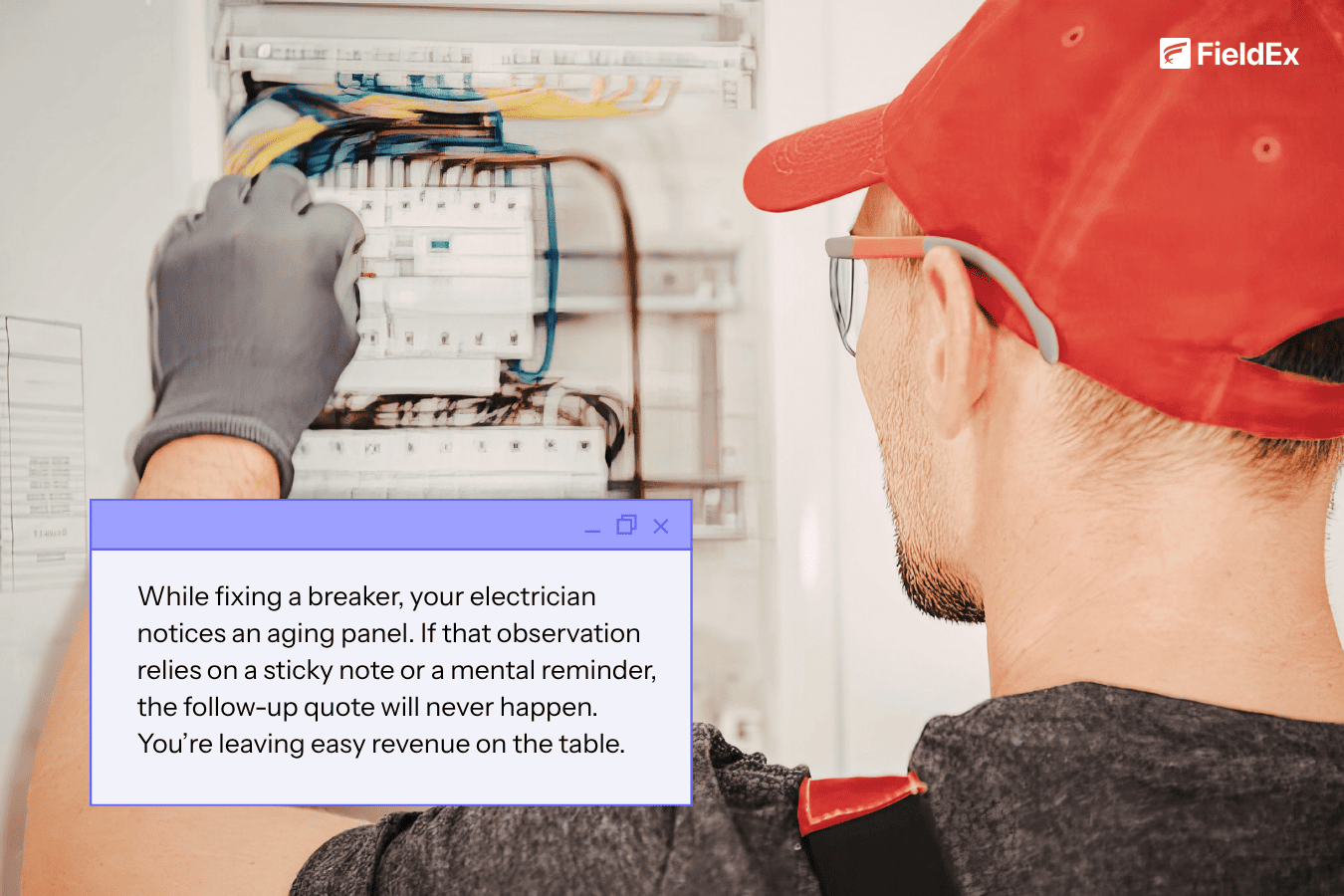
Don't just fix the broken AC. When a tech is on a commercial campus, assign a "Site Sweep" plan to have them inspect the plumbing and electrical assets while they are already getting paid to be on-site.
Move away from unpredictable "break-fix" revenue. Break-fix onsite repairs can run $80 to $100 per hour with costly two-hour minimums and travel fees. Instead, offer your clients predictability. Bundle your trades into one massive commercial PM contract (eg "We will handle your fire safety, HVAC, and plumbing maintenance for one annual fee"). Preventive maintenance helps avoid costly, surprise disruptions for the client while guaranteeing your recurring revenue.
A multi-trade business involves moving parts, and where there is movement, there is friction. Squeezing more profit out of your field operations means you must actively plug the leaks.
Wasted travel and idle time are massive profit killers in the trades. According to McKinsey research, construction productivity has remained flat for decades, heavily driven by poor short-term planning where necessary equipment or prerequisite work simply isn't ready when a crew arrives. Furthermore, poor coordination and delayed dependencies cause 61% of complex projects to exceed their original schedules. Stop sending the drywall team before the electricians are finished. By using software that digitally locks subsequent work orders until the prerequisite phase is signed off, you ensure technicians only travel when the site is fully ready for them.
Inventory shrinkage is a massive, silent margin killer. According to the National Retail Federation’s 2023 Retail Security Survey, the average inventory shrink rate across businesses has risen to 1.6% of sales, creating over $100 billion annual loss. If parts aren't tracked, they aren't billed. Assign every technician a virtual "User Bin" to track exactly which high-value parts are moved from the warehouse to their van, ensuring every copper pipe and contactor ends up on the final invoice instead of disappearing into thin air.
Manual dispatching leaves gaps in the schedule and delays response times. McKinsey notes that poor organization and sluggish decision-making in operational processes directly restrict speed and scale. Use automated "Round Robin" assignment logic to instantly distribute emergency calls to the next available, qualified technician, completely eliminating dispatcher bottlenecks and maximizing your daily job volume.

Doing the work doesn't matter if the cash isn't hitting your bank account quickly. A 2023 QuickBooks survey revealed that over 70% of small-to-medium businesses are negatively impacted by late payments, with 40% warning that continued late invoices could force them to close. Furthermore, data from SCORE indicates that 79% of small business owners are forced to cut their own pay when customer payments are slow. Use mandatory digital procedures that prevent a technician from closing a job until they collect a digital signature and auto-generate a PDF invoice right from the driveway, drastically accelerating your cash flow cycle.
To dominate the commercial and infrastructure sectors, you need to offer capabilities that smaller, single-trade competitors cannot match.
If you maintain public infrastructure (like EV chargers or streetlights), place public-facing QR codes on them. Anyone walking by can scan the code to report a fault, instantly feeding new, trackable work orders into your system.
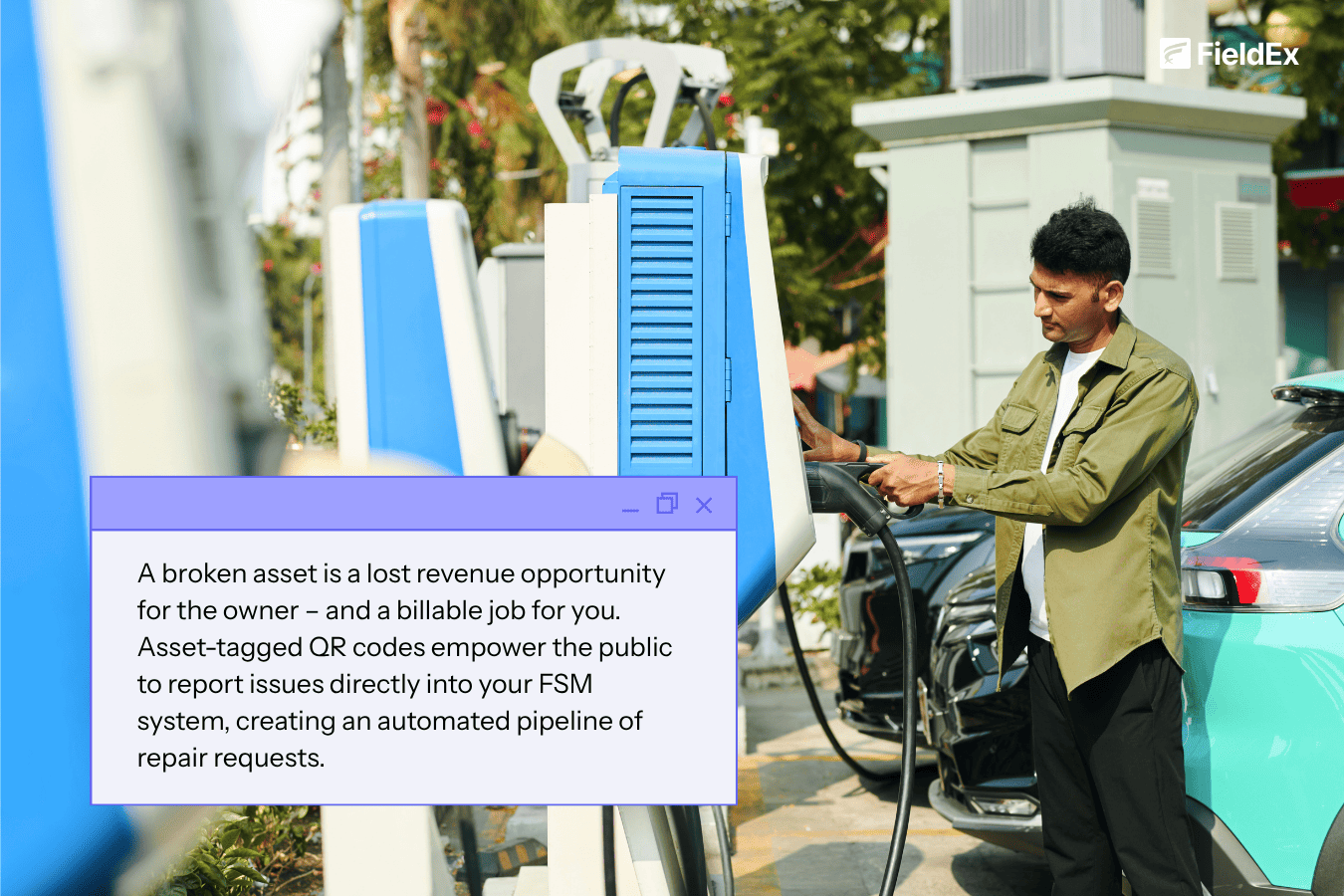
Don't do free repairs. Track complex equipment (like an EV station) down to its specific child components (cables, screens). If a screen breaks, your system will flag that specific component as under warranty, allowing you to bill the manufacturer instead of eating the cost.
Stop scheduling maintenance purely by the calendar. Use software that triggers work orders based on usage metrics (eg equipment run hours or charging cycles) so you are servicing – and billing for – heavy iron exactly when it needs it.
Operational tactics will fix your leaks, but to truly scale your company's valuation, you need to make high-level strategic shifts.
The fastest way to add a highly profitable trade to your existing business isn't to start from scratch – it’s to acquire a retiring single-trade owner’s business and instantly absorb their customer list.
Perception dictates pricing. Use software that lets you customize your terminology (changing "Customer" to "Site Host" or "Asset" to "Charge Point") so your commercial clients feel like they are working with a highly specialized firm, allowing you to command premium rates.
Stop paying thousands of dollars a month for three different software platforms. Merge your field dispatching and your heavy equipment fleet maintenance into a single hybrid platform to drastically slash your software overhead.
.png)
Multi-trade businesses have the highest revenue ceilings in the contracting world, but they also have the most operational leaks. You can't scale an empire if your data is fragmented and your dispatch board is chaotic.
Don't let bad data drain your profits.
Discover how FieldEx can automate your cross-selling, protect your inventory, and streamline your complex scheduling to maximize your multi-trade revenue today. Book a free demo today, or simply reach out. We’re here to help.
Cross-selling allows you to increase your revenue without paying a new customer acquisition cost (CAC). By offering your existing clients additional services – such as selling an electrical panel upgrade to a client who just bought a new HVAC system – you maximize the lifetime value of every customer you already have.
In a multi-trade business, a technician from one division often spots an issue that another division needs to fix, but forgets to report it. Checklist triggers are digital safety forms that automatically generate and assign a new work order to the correct department if a technician logs a negative response (eg "Frayed wire found"), ensuring no follow-up work slips through the cracks.
Break-fix work is unpredictable, leading to fluctuating revenue and chaotic dispatch boards. PM agreements allow you to bundle multiple trades (like fire safety, plumbing and HVAC) into a single, recurring annual contract. This guarantees predictable cash flow and allows you to schedule work during your slow seasons.
"Windshield time" is the unbilled time technicians spend driving between jobs. In multi-trade operations, poor coordination often leads to technicians arriving at a site before the prerequisite work is finished. This wasted travel directly decreases billable hours and shrinks your profit margins.
Automated dependencies digitally lock a work order until the previous phase is completed. For example, the drywall team's work order remains locked until the electrical team captures a digital signature on their completed phase. This prevents dispatchers from sending crews to unready sites.
Inventory bleed (or shrinkage) happens when expensive parts are taken from the warehouse but never added to a customer's invoice. User Bins are virtual, trackable inventories assigned to each specific technician's van. This ensures every contactor, pipe, or cable is tracked from the warehouse shelf directly to the final bill.
Manual dispatching relies on a human trying to match schedules, which causes bottlenecks and gaps in the day. Round Robin routing uses software to automatically distribute emergency calls to the next available, qualified technician. This speed allows your company to squeeze more billable jobs into a single day.
Cash flow dies in the transition between the field and the office. If technicians rely on paper, invoices can take weeks to process. Enforcing on-site invoicing requires technicians to collect a digital signature and generate a branded PDF invoice directly from their mobile device before they even leave the customer's driveway.
Complex commercial equipment (like an EV charging station) is a "parent" asset made up of many "child" components (screens, cables, internal batteries). Deep asset tracking allows your software to flag when a specific child component is still under warranty. This allows you to bill the original manufacturer for the repair instead of eating the cost yourself.
Running your dispatching, inventory, and heavy equipment maintenance on completely different software platforms requires expensive multiple subscriptions and forces your team into double data entry. Consolidating into a hybrid FSM and CMMS slashes your software overhead and creates a single source of truth for your entire operation.

.avif)


This website and its content are the property of FieldEx and are protected by copyright laws. © 2026 FieldEx. Any redistribution or reproduction of part or all of the contents in any form is prohibited, except with our express written permission.
FieldEx Pte Ltd Singapore