

.png)
If you're a facility manager, you likely already use a CMMS (Computerized Maintenance Management System) to manage boilers, HVAC units and plumbing. When EV chargers arrive on your property, the temptation is to simply add them to that existing system.
This is a mistake.
Generalist CMMS tools treat a 150kW DC fast charger like a toaster. They see it as a "dumb" metal box. They don't understand State of Health (SoH), firmware versions or OCPP error codes.
To manage high-voltage infrastructure effectively, you need a "Vertical CMMS" – a station operating system (‘Station OS’) that understands energy assets, safety compliance, and the complex "genealogy" of replaceable parts.
If you’re evaluating software in 2026, ensure it has these three specific capabilities:
With over 50 platforms competing for your budget, finding the right tool can feel like finding a needle in a haystack. To make this decision easier, we have divided the top 15 contenders into four distinct categories based on your operational model.
You don't need to read every single entry. Instead, identify which "bucket" describes your business and start there:
Best for: Operators who want one dedicated system for maintenance, safety, and assets.
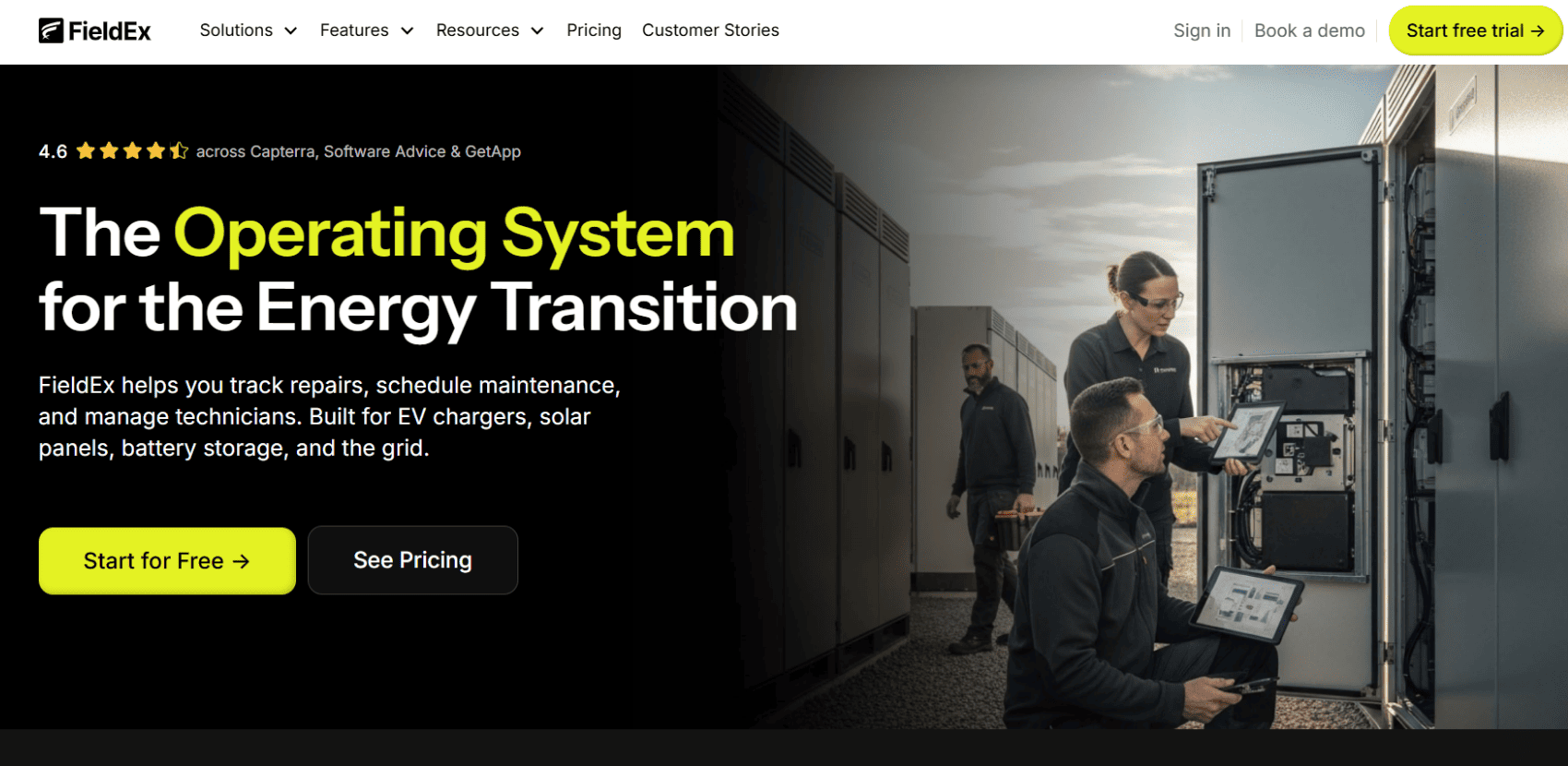
FieldEx is the only CMMS on this list built specifically for the "green umbrella" of distributed energy. While generalist tools require you to manually build workflows for "connector checks" or "filter replacements", FieldEx comes pre-loaded with the asset hierarchy of an EV charging station.
Why it is the #1 CMMS for EV: It understands that a charger is not just a metal box – it is a computer. FieldEx integrates directly with your charging data to trigger maintenance based on actual usage, not just guesswork.
FieldEx is more than just a maintenance log; it is a holistic station operating system.
Best For: Charge point operators (CPOs), energy service companies (ESCOs), and anyone managing mixed ev+solar assets.
Driivz is a heavyweight in the EV industry, managing millions of transactions for global oil and gas companies. While it is primarily known as a billing and energy management platform, its built-in "operations" module is a robust tool for teams that want to keep everything under one roof.
Why it’s a contender: Driivz shines in automation. Because it controls the charger's software, it can use "self-healing algorithms" to attempt remote fixes – like resetting a modem or unlocking a stuck connector – before a human ever sees a ticket. This can resolve up to 80% of simple issues without a truck roll. It is less of a "wrench-turning" tool and more of a "network health" tool.
Best For: Large network operators who prioritize software automation over physical asset repair.
Solidstudio offers a unique proposition in a market full of rigid SaaS tools: ownership. Instead of renting software that forces you to adapt to its workflow, Solidstudio offers a license model where you can own and modify the source code.
Why it’s a contender: For massive national networks or utilities, off-the-shelf software often hits a ceiling. Solidstudio provides the foundational building blocks – OCPP connectivity, asset databases, user modules – and allows your internal IT team to build a bespoke asset management system on top of it. It gives you total control over your roadmap and data security.
Best For: Enterprise CTOs and Utilities who want to own their tech stack and build custom workflows.
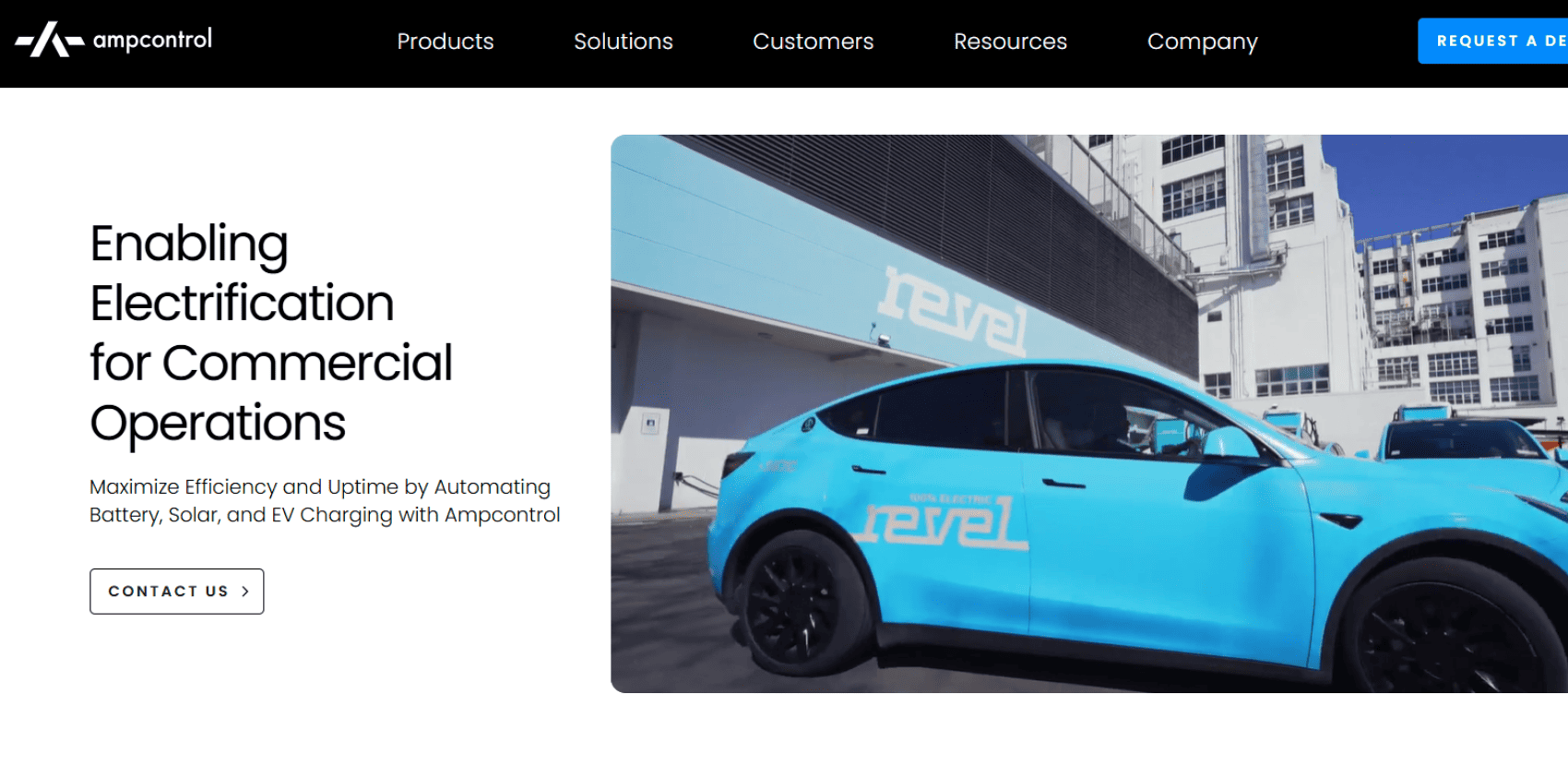
Ampcontrol is an AI-driven energy management platform that acts as a "diagnostic doctor" for your assets. While it isn't designed to manage physical repairs (like fixing a dented bollard), it is unmatched in diagnosing electrical health.
Why it’s a contender: Ampcontrol analyzes the real-time "heartbeat" of your chargers – voltage fluctuations, temperature spikes and load curves. It can predict a power module failure days before it happens, allowing you to schedule maintenance proactively. It is the perfect companion to a physical CMMS, handling the "brain" of the charger while you handle the "body”.
Best For: High-uptime fleet depots where an electrical failure means a missed delivery.
Best for: Massive infrastructure, power plants, and grid operators.
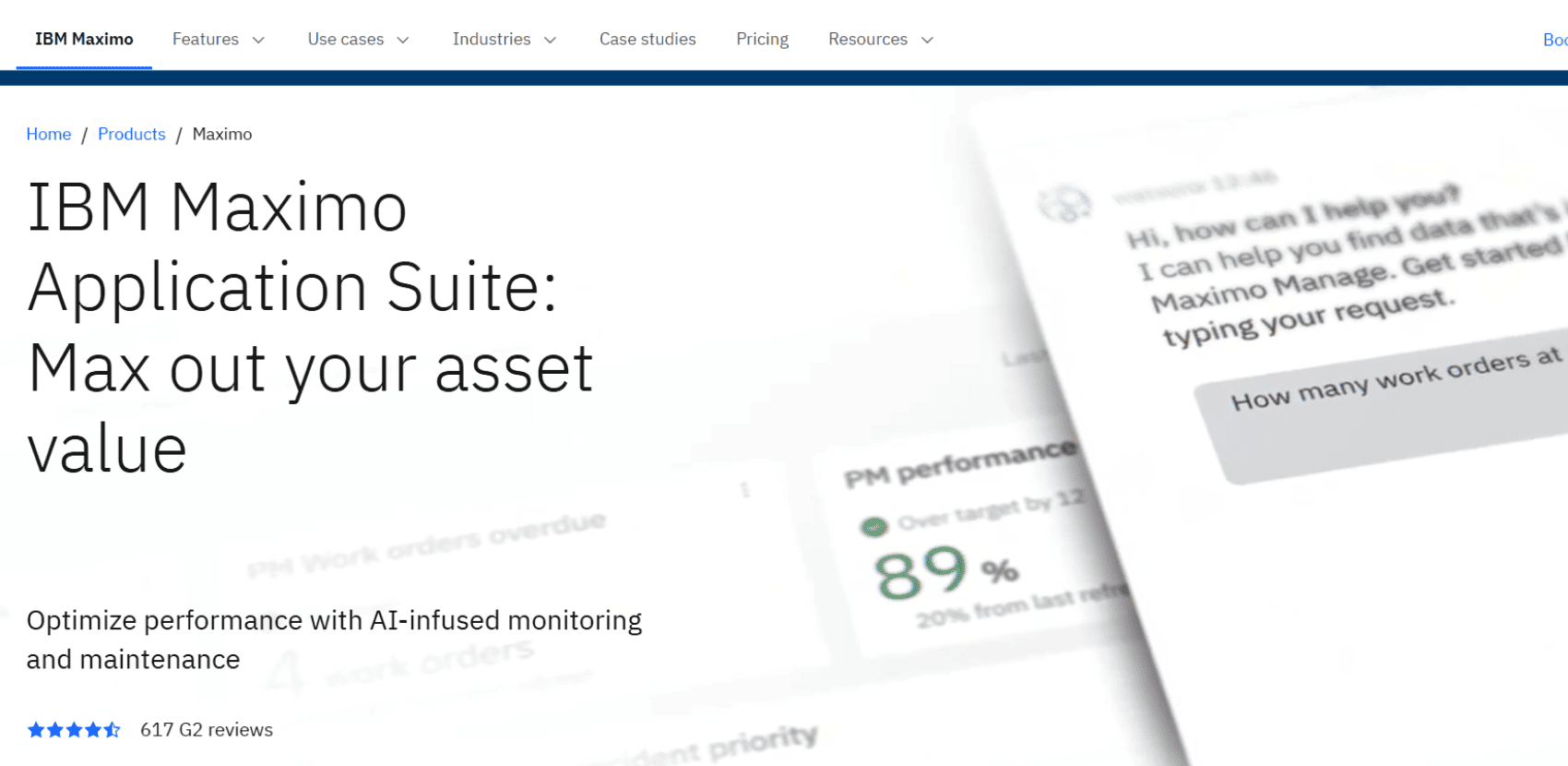
Maximo is the undisputed standard for the world's largest infrastructure. If you’re managing a city-wide power grid, a nuclear plant, or a rail network, you’re likely using Maximo.
Why it’s a contender: Maximo excels at grid-scale integration. It can link an individual EV charger's status directly to a utility's SCADA system, giving grid operators a holistic view of energy consumption across the entire city. Its financial modeling tools are powerful, capable of calculating the depreciation and Total Cost of Ownership (TCO) of an asset over a 20-year lifecycle down to the penny.
Best For: Major utilities where EV chargers are just a tiny fraction of a multi-billion dollar portfolio.
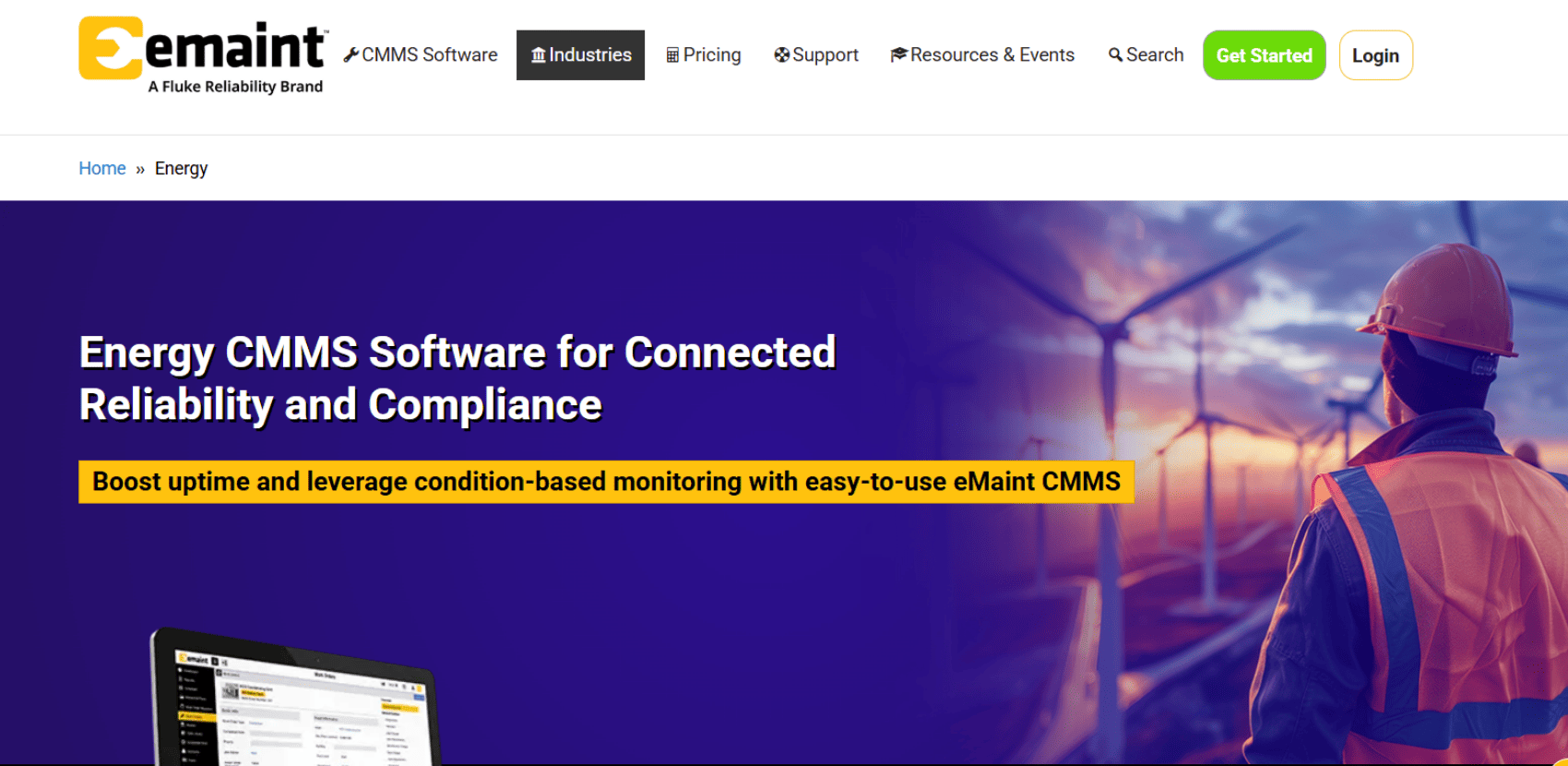
Owned by Fluke Reliability, eMaint bridges the gap between hardware testing tools and software management. It is the king of condition monitoring.
Why it’s a contender: eMaint shines when you attach physical sensors to your assets. You can install vibration sensors on cooling fans or heat sensors on high-voltage cables, and eMaint will automatically trigger a work order if the temperature exceeds a safety threshold. It takes the guesswork out of maintenance by relying on industrial-grade hardware data.
Best For: "Hardware-heavy" operators who want to monitor physical asset health using industrial sensors.
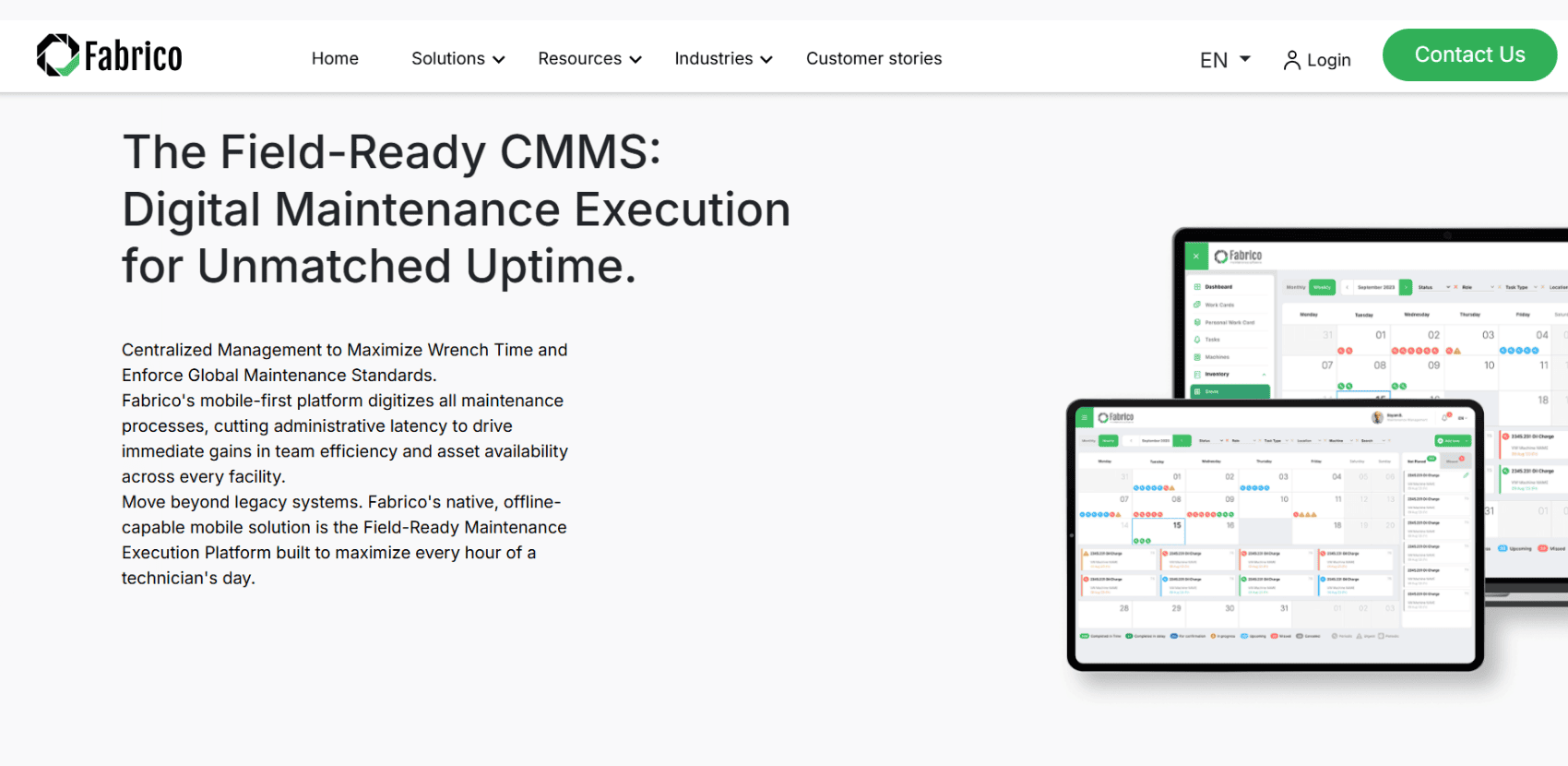
Fabrico is a modern, fast-growing CMMS designed specifically for the power generation sector – think solar farms, wind turbines and industrial plants.
Why it’s a contender: Fabrico has deep roots in industrial safety. Its standout feature is its digitized Lockout/Tagout (LOTO) and "Permit to Work" workflows. It ensures that no technician touches a high-voltage asset without a fully auditable digital safety permit. If your portfolio includes solar farms or generation assets alongside chargers, Fabrico is a natural fit.
Best For: Mixed portfolios of solar farms, wind, and EV charging sites.
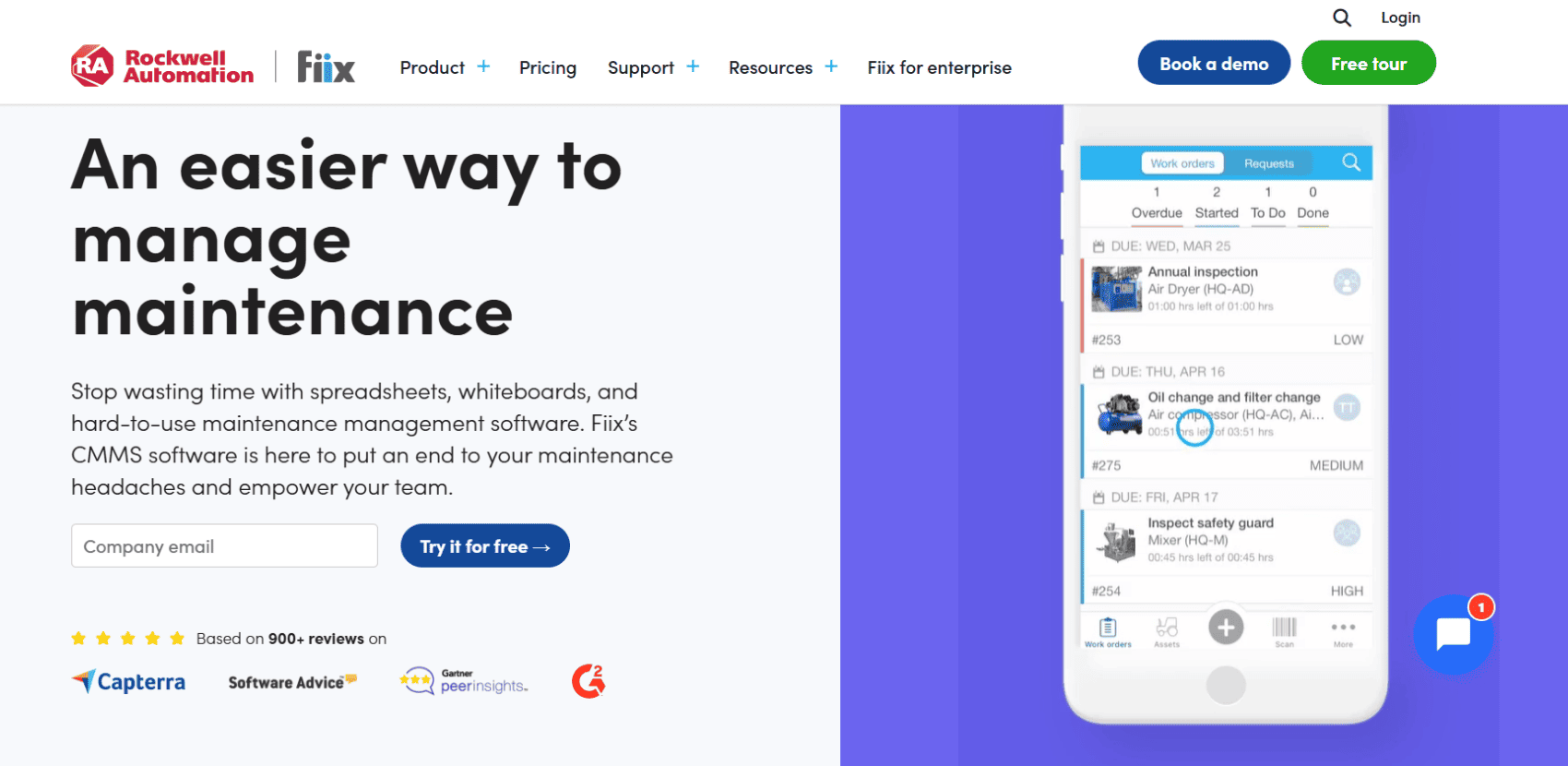
Owned by Rockwell Automation, Fiix is the go-to CMMS for the manufacturing world. It connects seamlessly to factory floor systems and PLCs.
Why it’s a contender: If your EV chargers are located inside a manufacturing plant or a large industrial depot, Fiix allows you to manage them alongside your conveyor belts and robotic arms. It uses AI to spot trends in part usage, helping you optimize your spare parts inventory so you never run out of critical components.
Best For: "Fleet Depots" located inside a larger manufacturing complex.
Best for: Municipalities, Bus Depots, and Public Works.

AssetWorks is the gold standard for cities, counties, and universities. It is likely the software already managing your city’s garbage trucks, police cruisers, and school buses.
Why it’s a contender: AssetWorks offers a unified fleet view. It has a dedicated "EV Infrastructure" module that ties the charger directly to the vehicle record. This means a fleet manager can see the total cost of ownership for a specific electric bus – including the cost of the electricity and the maintenance of the charger it uses. It simplifies life for public works directors by keeping everything in one system.
Best For: Public works directors and municipal fleet managers.
Best for: Retailers, Hotels, and Offices managing chargers alongside HVAC/Plumbing.
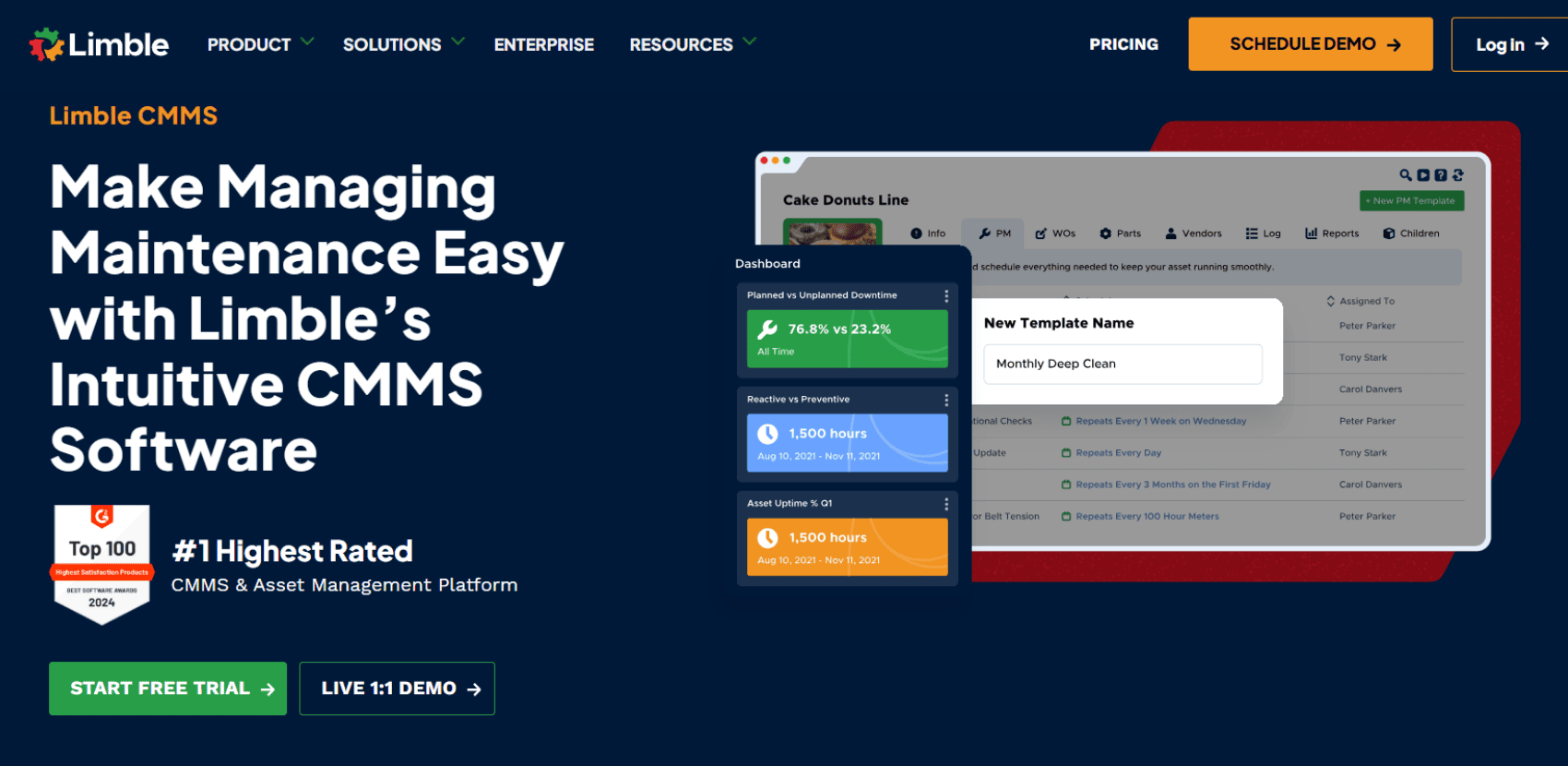
Limble has taken the market by storm by being the "anti-legacy" CMMS. It is modern, fast, and incredibly flexible.
Why it’s a contender: Limble’s greatest strength is its modularity. You can create custom asset fields, QR codes and PM checklists in minutes without writing code. This makes it perfect for agile facility teams who want to build their own specific "EV Charger" templates from scratch. It puts the power in your hands rather than forcing a rigid workflow on you.
Best For: Agile facility teams who want a modern tool and are willing to set up the templates themselves.
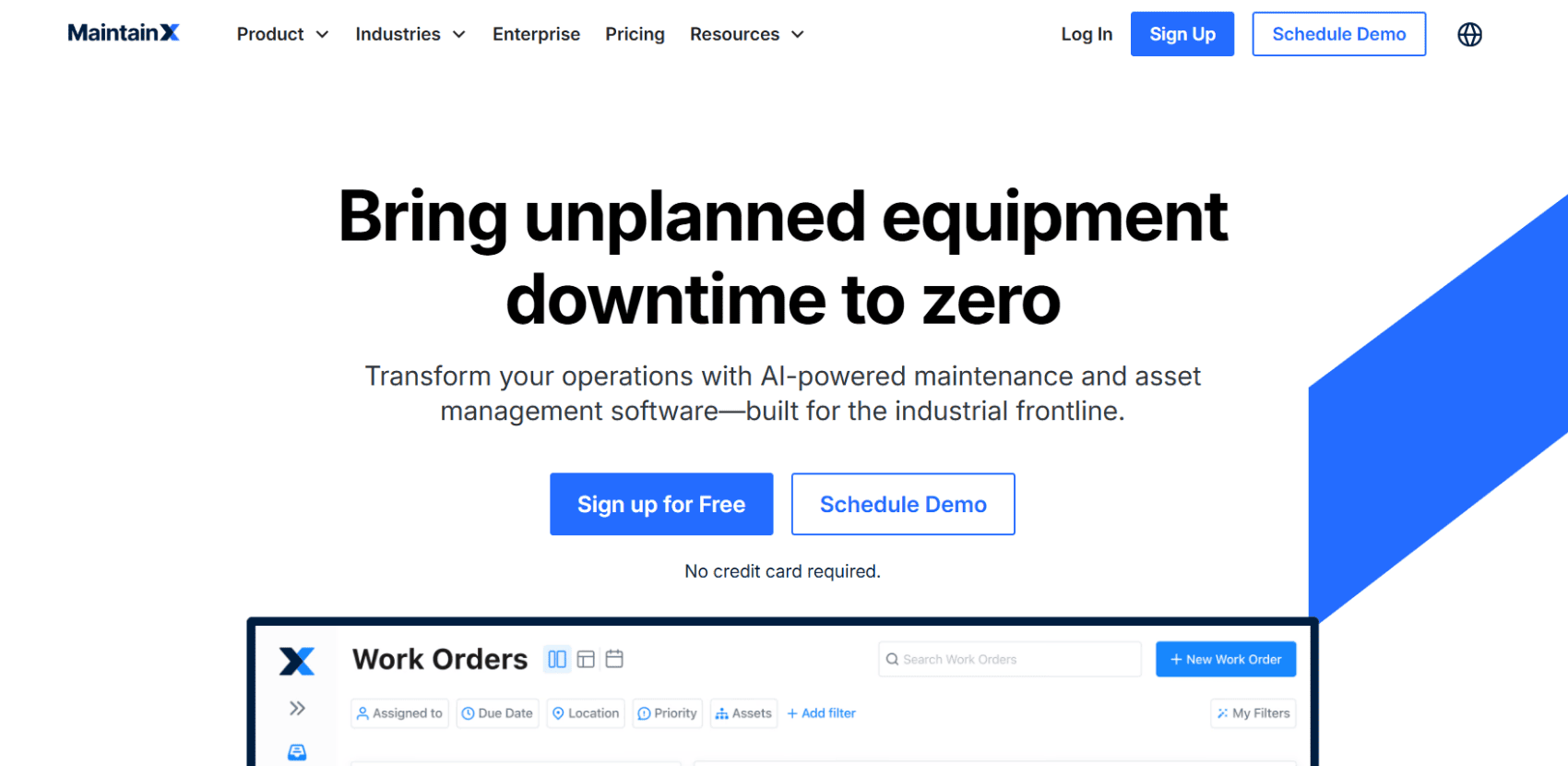
MaintainX is often called the "WhatsApp of CMMS”. It replaces clunky clipboards with a chat-centric mobile interface that field technicians actually like using.
Why it’s a contender: The barrier to entry is near zero. A technician can walk up to a broken charger, snap a photo, and create a work order in 10 seconds. Its "Procedure" tool allows you to digitize paper checklists into simple mobile forms. If your team struggles with complex technology, MaintainX is the best way to get them to actually log data.
Best For: Teams that struggle with technology adoption and need a simple, chat-based solution.
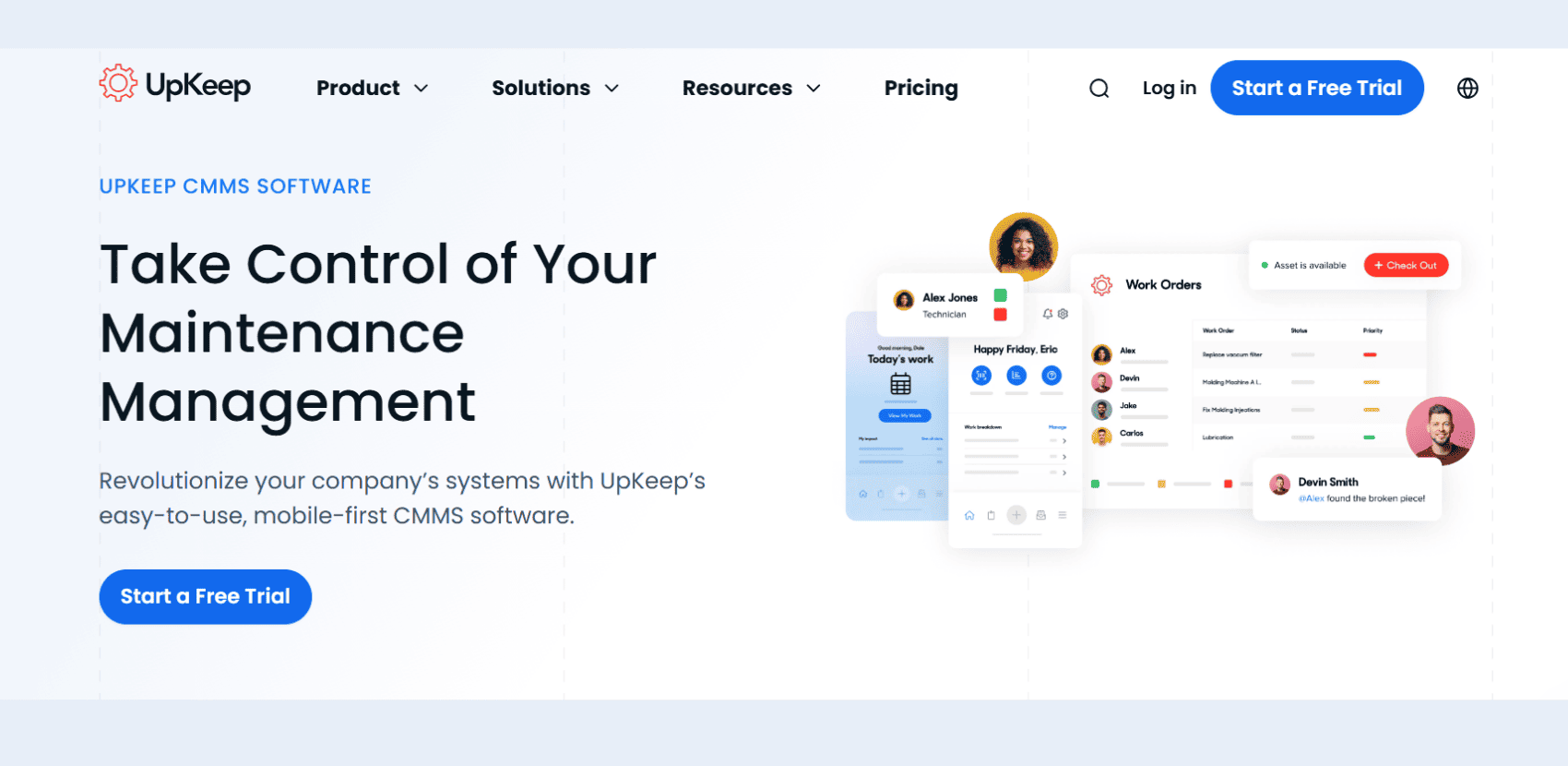
UpKeep was one of the first mobile-first CMMS platforms and has built a strong reputation for inventory and parts management.
Why it’s a contender: UpKeep excels at inventory visibility. You can see exactly how many replacement screens, cables, or holsters you have in stock across multiple storage rooms. It also integrates well with basic IoT sensors for temperature and humidity monitoring, giving facility managers a clear view of their stock levels and asset conditions.
Best For: General facility managers who need to track inventory alongside work orders.
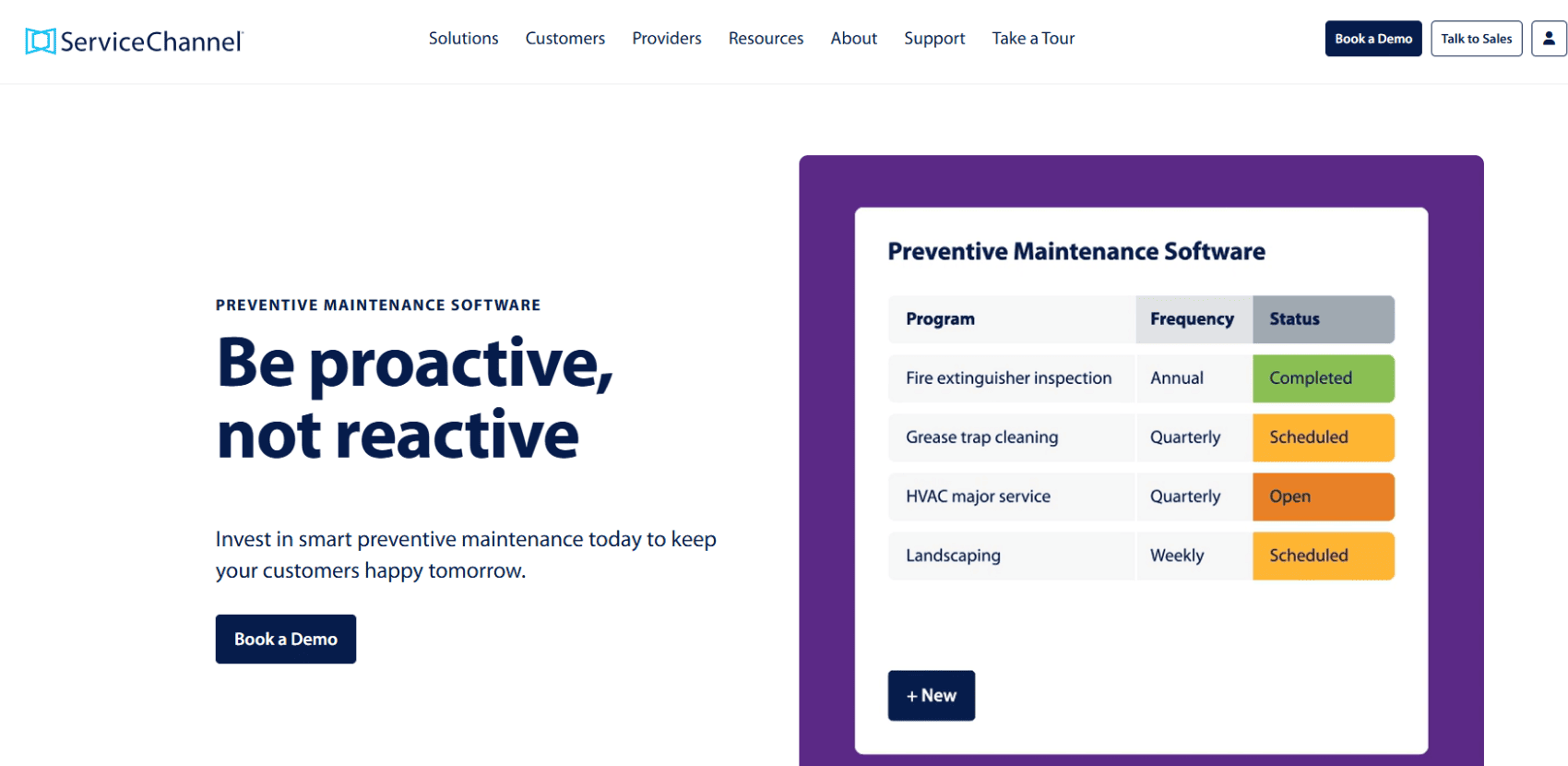
ServiceChannel is the default operating system for multi-site retail. If you walk into a Walmart, Target or CVS, the maintenance is likely running on ServiceChannel.
Why it’s a contender: This platform is not designed for fixing things yourself; it is designed for dispatching others. It gives you access to a massive marketplace of pre-vetted electrical contractors. You simply post a "broken charger" ticket, and a local pro accepts the job. For retailers with 500 locations and zero internal technicians, this is the only scalable way to manage maintenance.
Best For: Retailers with 500+ locations and no internal technicians.
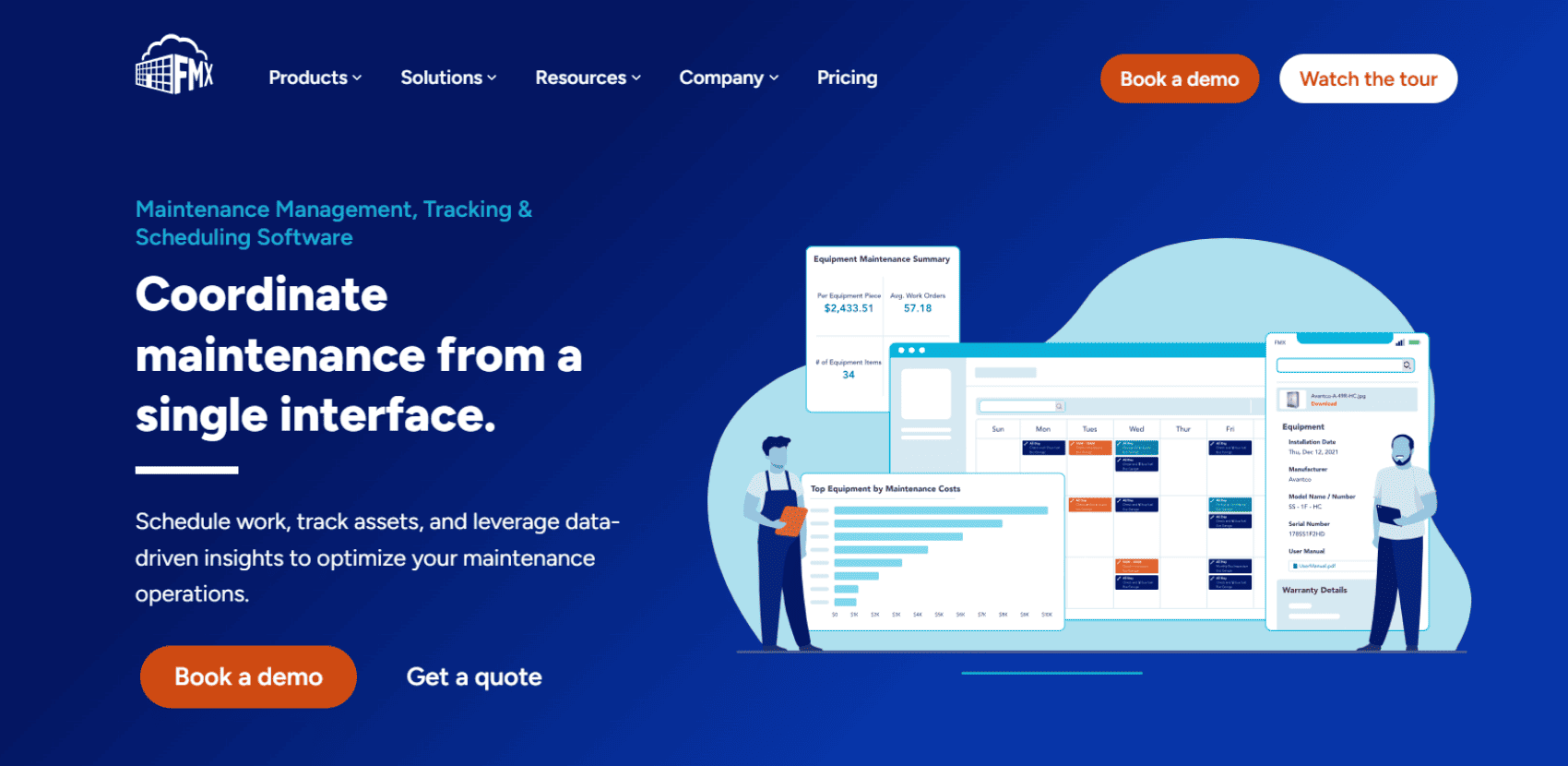
FMX is a facility management tool built specifically for the needs of K-12 districts and universities.
Why it’s a contender: FMX is designed for community engagement. It allows non-technical users – like teachers, principals, and event coordinators – to easily submit tickets ("The charger in the faculty lot is beeping"). It also manages event scheduling, so you don't schedule charger maintenance during the big football game. It keeps the entire campus connected.
Best For: School districts needing a simple tool for facilities and events.
Techniche is unique on this list because it focuses less on the asset and more on the human fixing it.
Why it’s a contender: Techniche is an oversight tool. It tracks your third-party vendors to ensure they are meeting their Service Level Agreements (SLAs). It measures "time to respond", "first-time fix rate" and "vendor cost" with extreme precision. If you outsource your maintenance, Techniche gives you the data you need to hold your vendors accountable.
Best For: CPOs who outsource 100% of their maintenance and need to hold vendors accountable.
The biggest shift in 2026 is the move from reactive to predictive maintenance.
The EV operators winning today aren't just fixing broken plugs – they’re managing complex, data-rich energy assets that require specialized care.
Treating a high-voltage charger like a standard facility asset is a strategic dead end. A generic work order can’t diagnose a firmware conflict, and a spreadsheet can’t track the warranty on a blown power module.
Your software choice ultimately defines your operational DNA. It’s the difference between constantly reacting to failures and engineering true resilience. Stop looking for a tool that simply logs problems, and start building an operating system that prevents them.
It comes down to their core function:
Note: A "Station OS" like FieldEx combines FSM and CMMS into one vertical platform.
You can, but it’s risky. Generalist CMMS tools treat a 150kW DC Fast Charger like a restroom exhaust fan. They lack the asset genealogy to track sub-components (eg "Power Module A" vs "Power Module B"). If a module fails, a generalist CMMS won't tell you that specific part is still under warranty, leading you to pay for repairs that should be free.
To keep federal NEVI funding, you must report uptime using specific "outage cause codes" defined by the Joint Office of Energy and Transportation.
CBM moves you away from calendar-based maintenance (eg "Check filter every 6 months") to data-driven maintenance.
A charging station isn't one block; it's a collection of swappable parts (screen, credit card reader, power modules, cables). "Genealogy" tracks the life story of each part.
Most generalist tools keep these in silos (Solar data in one app, EV data in another). A "Station OS" uses a Unified Asset Tree to link them. This allows you to see cause-and-effect relationships – for example, realizing that your EV charger isn't "broken", but is throttling speed because the onsite Battery Storage system is overheating.

.avif)

