11 best FSM software for EV charger maintenance (2026 guide)
We rank the top 11 FSM platforms for 2026 – including FieldEx, Techniche, and Driivz – to help you bridge the "maintenance gap" and hit 97% NEVI uptime.
EV charger networks are scaling fast, but most operators are stuck with dashboards that detect problems – not solve them.
CPMS (Charge Point Management System) platforms handle payments and user access brilliantly. But when a 150kW dispenser throws "Error 404" at 2am, they can't dispatch the right technician, verify safety certifications, or track the exact spare cable in the service van.
In 2026, the smartest operators layer specialized FSM beneath their CPMS to close the gap between "charger offline" and "charger repaired" – safely, compliantly and profitably.
The "Maintenance Gap": Why your CPMS can't fix a broken charger
Before evaluating the 11 best platforms defining the market in 2026, it’s critical to understand why standard software fails in the field. A CPMS (like ChargePoint or Driivz) is excellent at detection(telling you a charger is down), but typically poor at resolution (coordinating the repair).
It creates a "maintenance gap”. A CPMS flags "Error 404", but it often cannot:
tell you which technician has the spare cable in their van
verify if that technician has the required "High Voltage" certification
enforce a safety checklist (NFPA 855) to prevent electric shock.
To bridge this gap, mature operators are adopting station operating systems (‘Station OS’) – dedicated FSM layers that sit below the CPMS to manage the physical execution.
Category 1: Station operating systems (the execution layer)
Best for: Operators and contractors needing safety, compliance and physical repair logic.
Category: Industrial FSM for EV Infrastructure (the ‘Station OS’)
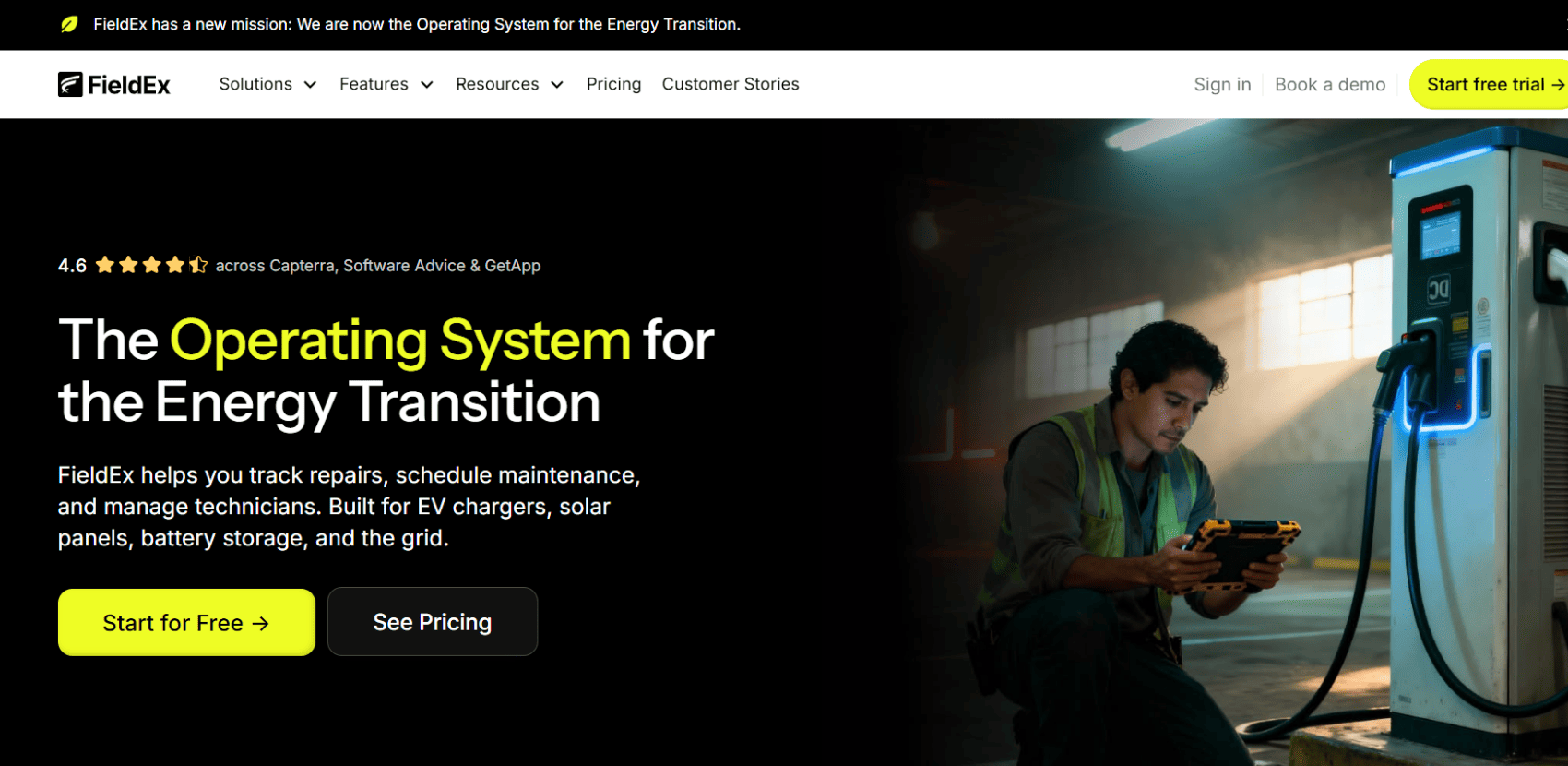
FieldEx is built for the gritty, high-stakes reality of maintaining critical energy infrastructure. While most software in this list focuses on the "digital handshake" (payments, app connectivity), FieldEx is engineered for the "wrench turn”.
FieldEx operates on a simple premise: A digital alert doesn't fix a broken charger. When a 150kW dispenser goes offline, you need more than a ticket – you need a coordinated operational strike. FieldEx ensures the right technician arrives with the exact spare part, the correct safety clearance, and the specific repair protocol needed to bring that asset back to life safely.
Why it's a top pick for operations: It is the only platform that acts as a true "execution layer" for distributed energy resources (DERs). Whether you manage 50 chargers or 5,000, FieldEx automates the complex logistics that generic FSMs miss, effectively bridging the "maintenance gap" that kills profitability.
Core FSM Features (The Operational Engine)
Smart Dispatch & Liability Shield: The system doesn't just schedule; it protects. FieldEx creates a "digital fence" around your work orders. If a repair involves a 480V cabinet, the dispatch engine automatically blocks assignment to any technician who lacks a valid, unexpired "High Voltage" or EVITP certification. This eliminates the risk of sending an unqualified tech to a dangerous job.
"Van-Level" Inventory Visibility: Generic software tracks parts in the warehouse; FieldEx tracks parts in the truck. Before a technician is dispatched to fix a broken screen, the system verifies that the specific replacement part is currently in their van's inventory. This single feature virtually eliminates the "second truck roll" – the industry's biggest profit killer.
Mandatory Safety Logic (Lockout/Tagout): FieldEx turns safety manuals into active workflows. You can configure "mandatory logic" gates that physically prevent a technician from closing a ticket until they input specific safety values – such as verifying a Lockout/Tagout procedure or confirming a zero-voltage reading. This ensures 100% compliance with NFPA 855 fire codes.
Strategic Bonus: FieldEx as the Station Operating System
Beyond immediate repairs, FieldEx equips you with a "Green Umbrella" architecture designed for the future of energy.
Unified Mixed-Asset Management: Modern sites are becoming microgrids, often pairing EV chargers with solar canopies and battery storage (BESS) to lower demand charges. FieldEx allows you to manage all these assets under a single "Station ID." A single technician can service the solar inverter, the battery cooling system, and the EV charger in one trip, using one app.
Automated NEVI Compliance: FieldEx’s "compliance engine" automatically captures the precise failure cause codes and repair timestamps required by the Federal Highway Administration. It generates audit-ready reports to prove your 97% uptime, protecting your grant funding.
Digital Battery Passport: FieldEx tracks the "genealogy" of every component. It creates an immutable history of every battery module swap, ensuring you are ready for the EU Battery Regulation and can easily prove warranty status on aging components.
Techniche is focused purely on the maintenance of critical assets. They have built a reputation on streamlining communication between the CPO and third-party maintenance vendors.
Key Features
Vendor Performance Tracking: Deep visibility into vendor response times and first-time fix rates, helping you police your SLAs.
Uptime Analytics: Moves beyond simple percentages to calculate the precise revenue loss due to downtime.
Asset Agnostic: Integrates with various CPMS platforms to automatically trigger work orders when a fault code is detected.
Best For
CPOs who outsource 100% of their maintenance and need to police vendor SLAs.
Scoop started in solar but has expanded into EV infrastructure. It excels at the "Project" phase – managing the installation and commissioning of new sites – before transitioning them into O&M.
Key Features
Project Tracker Live: A specialized dashboard for managing the complex timeline of a new build, from permitting and trenching to final commissioning.
Mobile Work Apps: Highly customizable mobile forms for site surveys and installation checklists that field crews can access anywhere.
Solar DNA: Native understanding of renewable assets, making it a strong choice for installers building mixed Solar+EV sites.
Best For
EPCs (Engineering, Procurement, Construction) firms who build sites and then maintain them.
Category 2: Smart Energy & Fleet Optimization
Best for: Managing grid loads, lowering electricity costs, and V2G.
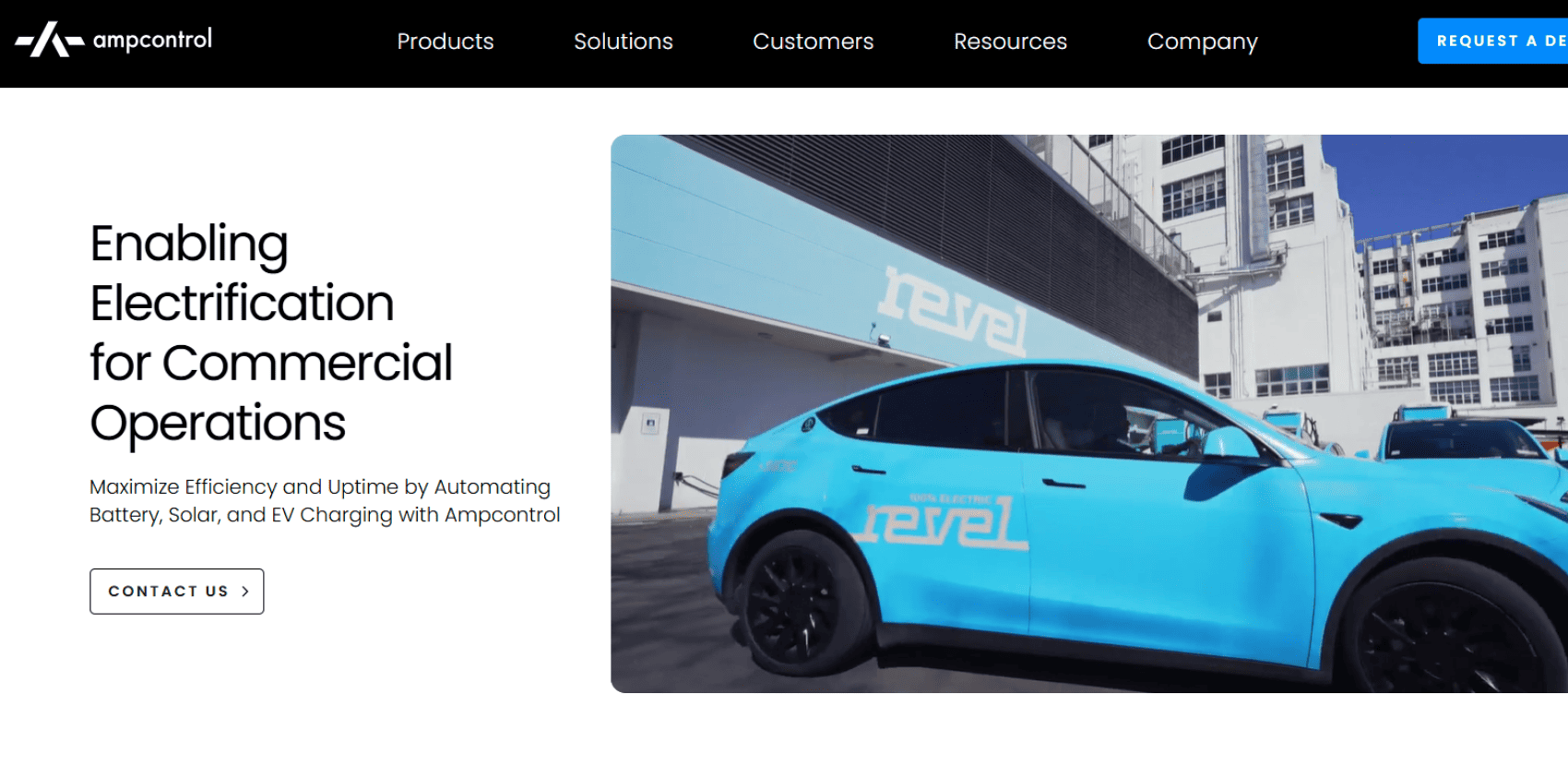
Ampcontrol is a specialized AI platform for electric fleets (trucks, buses, vans). It focuses on ensuring vehicles are charged on time while minimizing energy costs.
Key Features
99.999% Uptime Focus: Built for mission-critical fleets where a dead battery means a missed delivery.
Telematics Integration: Connects directly to the vehicle (eg via Geotab) to see the real-time State of Charge (SoC), not just what the charger reports.
Dynamic Load Management: AI algorithms that balance charging power to avoid blowing fuses or hitting peak demand charges.
Best For
Logistics companies and fleet depots where "on-time departure" is the #1 metric.
Category: Energy Management & Vehicle-to-Grid (V2G)
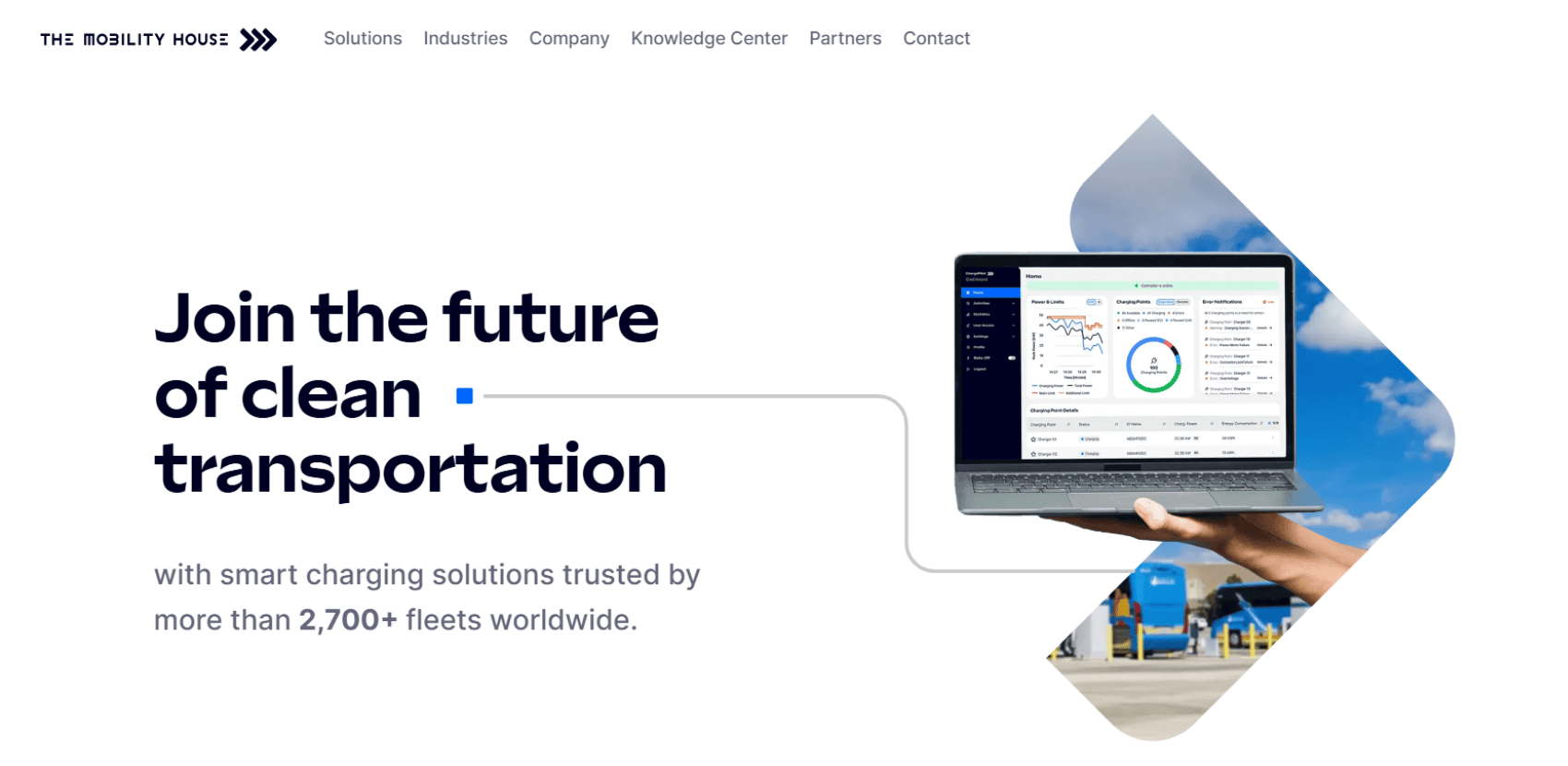
The Mobility House is a pioneer in ChargePilot, a system that intelligently distributes available power. They are leaders in V2G (Vehicle-to-Grid) technology.
Key Features
ChargePilot® Controller: A local hardware controller that manages power across different charger brands on the same site, preventing grid overloads.
Grid Connection Savings: Allows you to install more chargers than your grid connection theoretically allows by dynamically throttling power during peaks.
Bus & Transit Focus: Deep expertise in managing complex charging schedules for municipal bus fleets.
Best For
Bus depots and sites with limited grid capacity.
Category 3: White-Label & Commercial CPMS
Best for: Building your own network brand and handling payments.
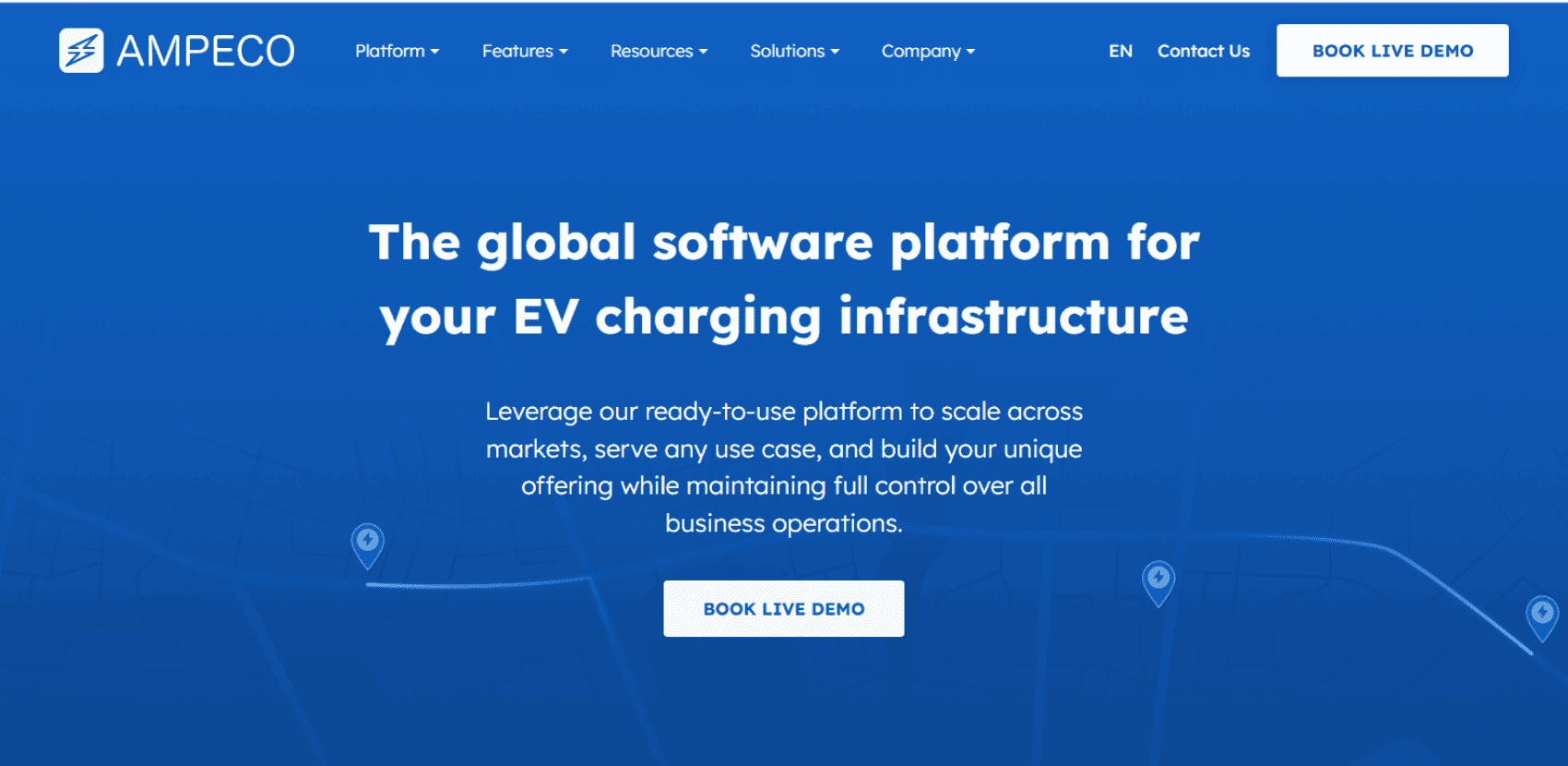
AMPECO provides a "business-in-a-box" for companies that want to launch their own EV charging network. You get their powerful software, but painted in your brand colors.
Key Features
White-Label App: Your customers download your app, not AMPECO's, allowing you to build brand loyalty.
Self-Healing Algorithms: Automated scripts that attempt to fix charger errors remotely (eg unlocking a stuck connector) before alerting a human.
Hardware Agnostic: Freedom to mix and match almost any OCPP-compliant hardware brand.
Best For
Entrepreneurs and businesses launching a new CPO network.
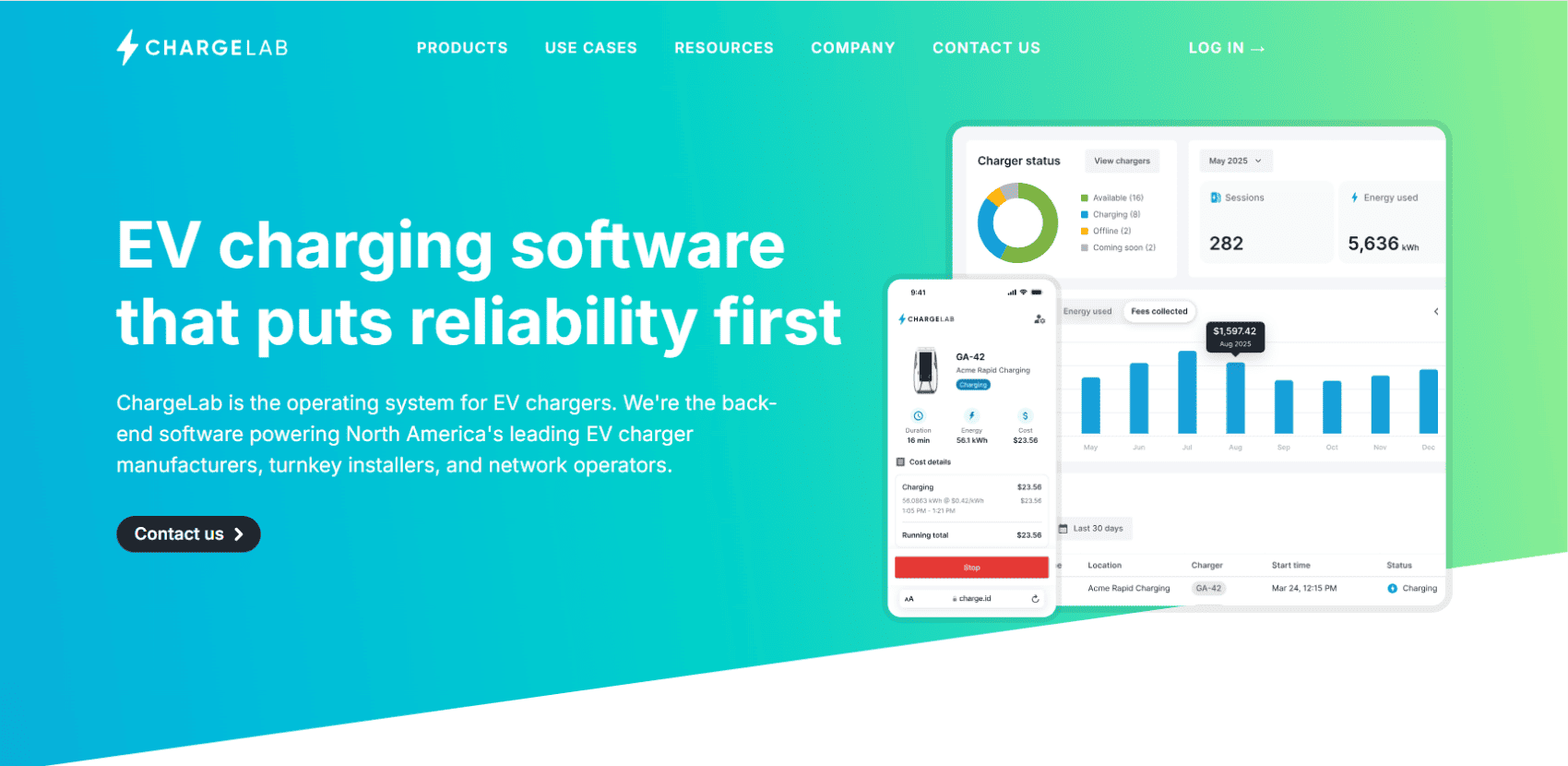
ChargeLab is a user-friendly platform often used by commercial buildings, apartments, and condos. It focuses on ease of use for property managers who are not energy experts.
Key Features
Building Management Focus: Excellent tools for assigning chargers to specific tenants or apartment units, making billing simple.
Open Standard: Works with virtually any OCPP charger, allowing property managers to bid out hardware.
Document Management: Simple tools for managing user access and billing in shared parking environments.
Best For
Property managers, apartments (MUDs), and workplaces.
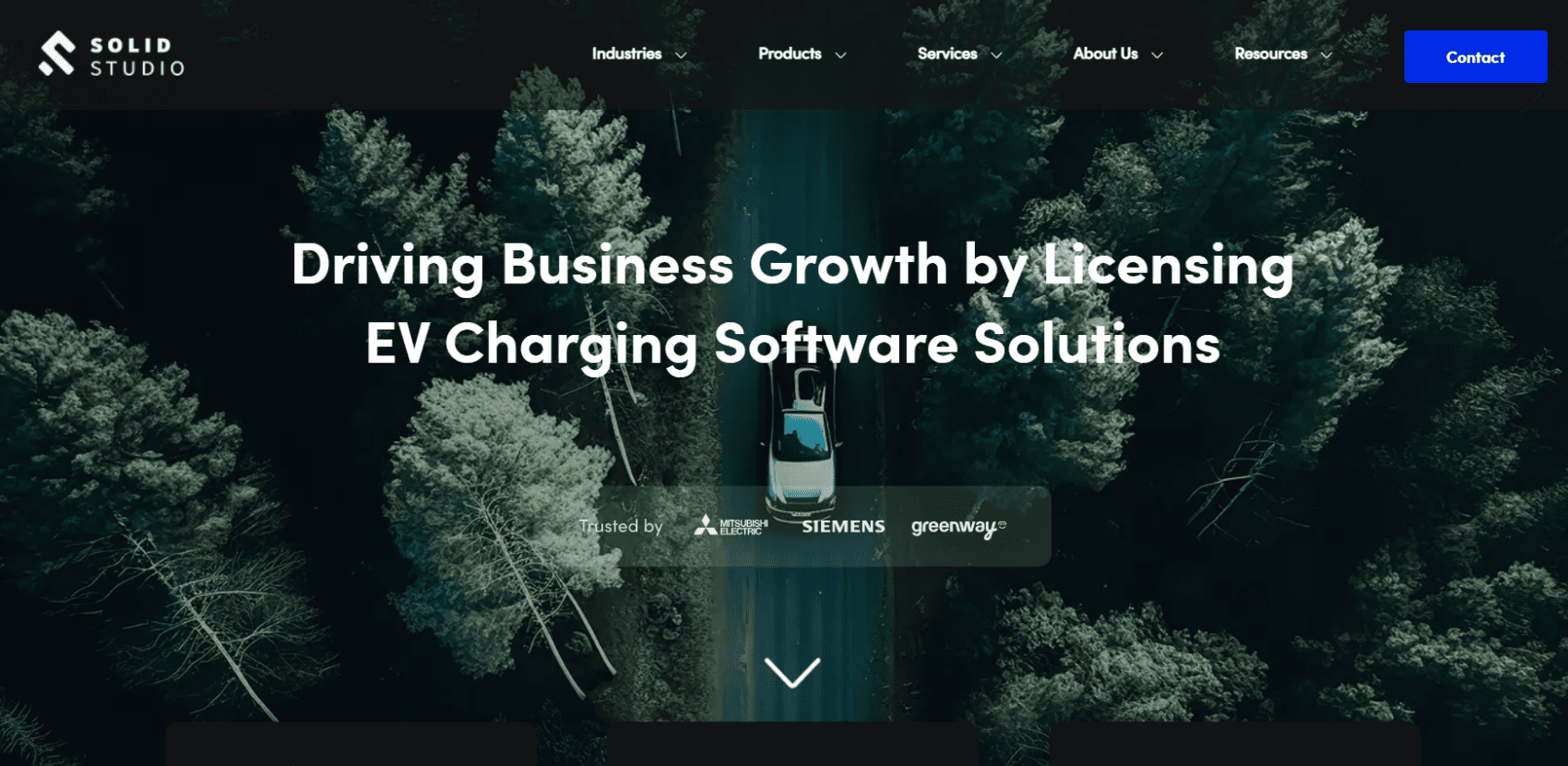
Solidstudio offers a unique model: instead of just renting software (SaaS), they offer "software license" options where you can own and customize the code.
Key Features
Code Ownership: Options to license the source code, giving you total control over your roadmap and security – ideal for massive enterprises.
eMSP App: A fully white-label mobile app for drivers.
OCPI Roaming: Built-in integrations for roaming, allowing your drivers to charge on other networks without friction.
Best For
Large enterprises or energy companies that want to own their tech stack without building from scratch.
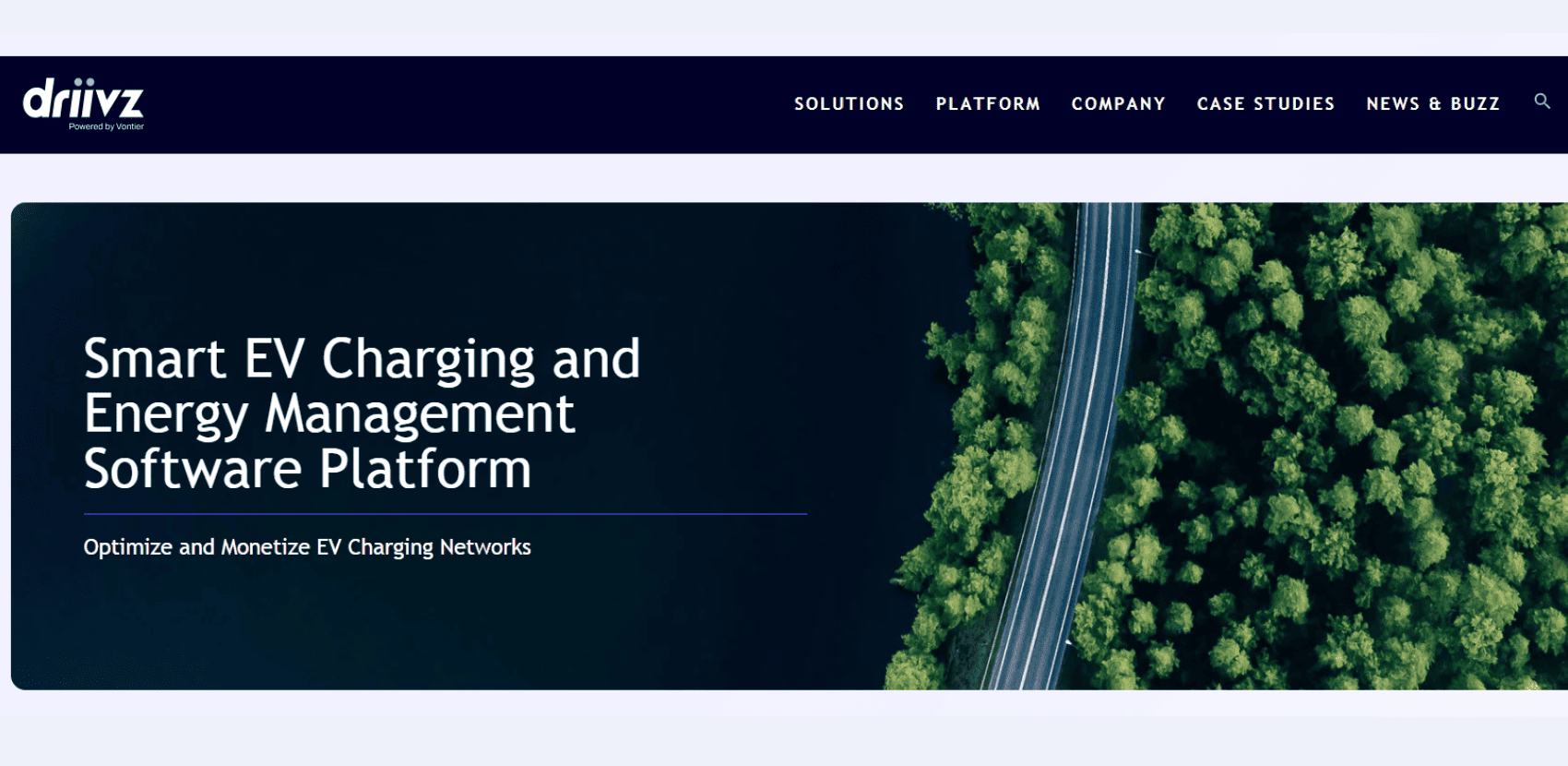
Driivz is the heavyweight champion for massive global networks. Used by major oil and gas companies and utilities, it handles millions of transactions.
Key Features
Global Roaming & Billing: Robust engines for handling complex cross-border tariffs and currencies.
Self-Healing Network: Advanced remote diagnostics that resolve up to 80% of software issues automatically.
Grid Integration: Deep ties into utility demand-response programs for V2G and grid balancing.
Best For
Global oil & gas companies and large-scale utilities.
Category 4: Generalist Enterprise Tools
Best for: Managing the entire business (HR, finance, repair).
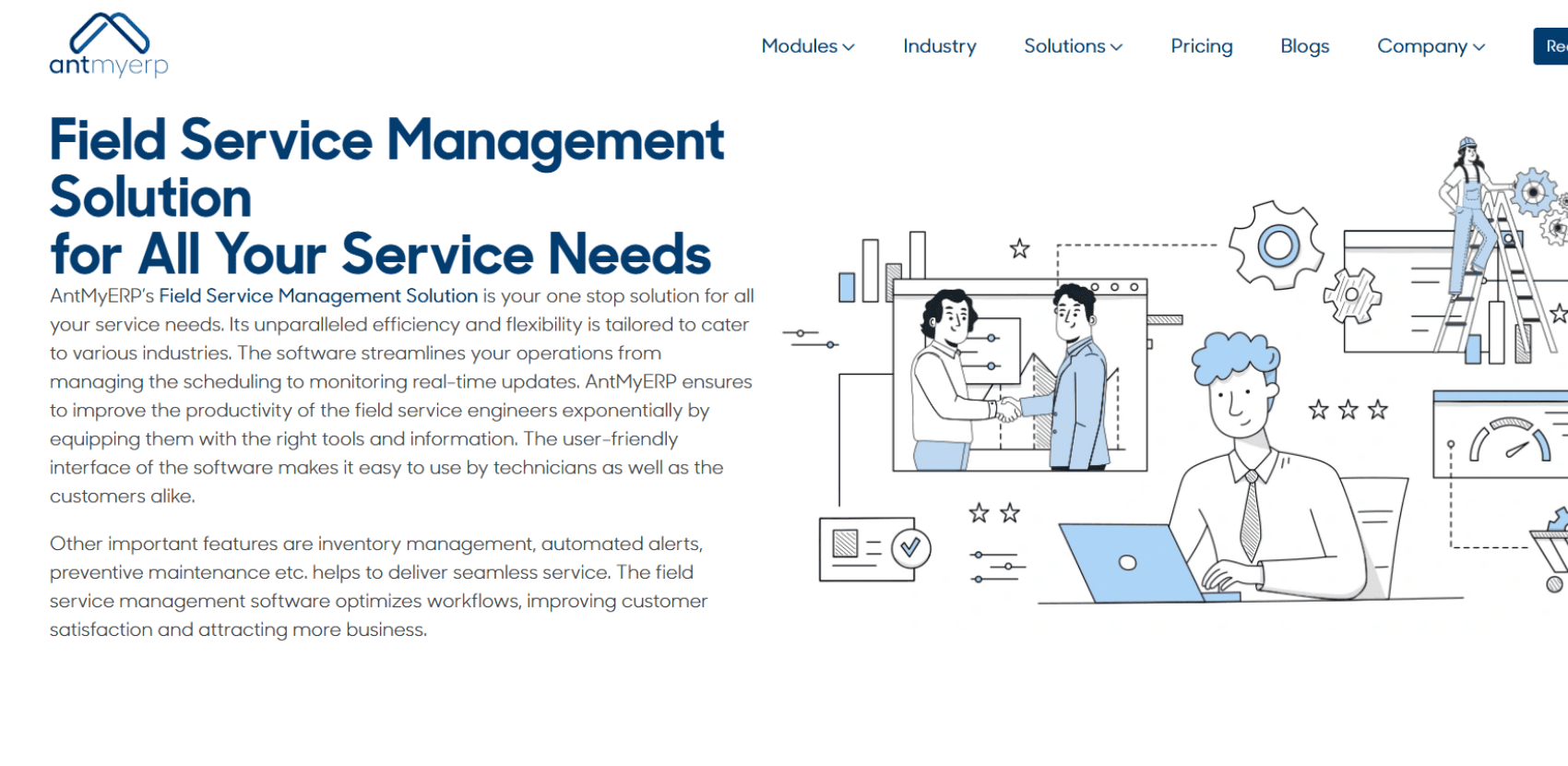
AntMyERP is an all-in-one business suite for IT and service companies. It isn't EV-specific, but it runs the whole business – from HR to invoicing to repair.
Key Features
All-in-One: Manages your CRM, HR (payroll/attendance), inventory, and service ticketing in one login.
Rental Management: Strong features for companies that rent equipment (like mobile chargers) rather than sell it.
Cost Effective: Generally more affordable for small-to-mid-sized service businesses than enterprise tools.
Best For
Smaller service companies who need one tool to run their entire office and field operations.
The ROI of resilience: Calculating the cost of downtime
Why invest in specialized software like FieldEx? Because downtime is expensive.
For a DC Fast Charger, downtime isn't just lost revenue ($100–$400/day depending on utilization). It creates:
SLA Penalties: Fines from site hosts for missing 97% uptime targets.
NEVI Clawbacks: Risk of losing federal grants if you fail to report uptime correctly.
Brand Damage: One "stranded" driver kills your reputation on PlugShare.
A Station OS pays for itself by ensuring the first-time fix.
Comparison verdict: Which one is for you?
Choose FieldEx if you are an Operator or Contractor needing a Station OS for safety, NEVI compliance, and mixed assets (Solar + Storage).
Choose Techniche if you strictly outsource maintenance and need to police vendor SLAs.
Choose Ampcontrol if you manage a Fleet and need to optimize on-time departures.
Choose AMPECO or Solidstudio if you are building your Own Network Brand.
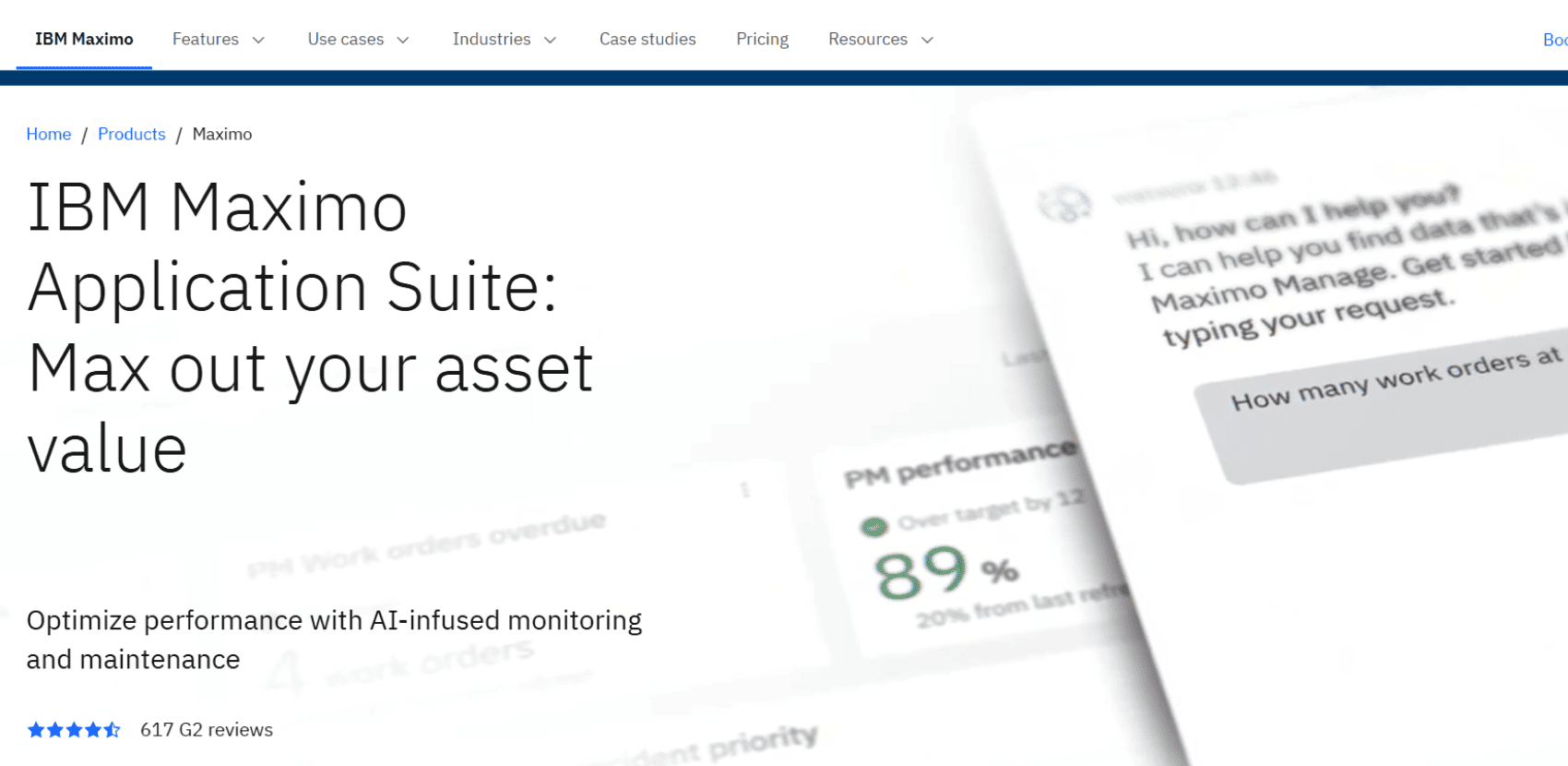
Choose IBM Maximo if you are a Utility integrating into a legacy grid.
The shift from "uptime" to "resilience"
The early days of "install it and forget it" are over. As we move through 2026, the EV charging market is being ruthlessly divided into two camps: operators who manage Billing, and operators who manage Resilience.
The winners of the next decade won't just be the ones with the most chargers in the ground; they will be the ones whose chargers actually work – safely, consistently, and profitably.
Frequently asked questions (FAQs)
1. Can't I just use my CPMS (like ChargePoint) for maintenance?
CPMS tools are great for "soft" repairs (restarts), but they lack the inventory and safety logic for "hard" repairs (cable swaps).
2. Why is "mixed asset" management important?
Modern sites are microgrids. A "Station OS" like FieldEx consolidates the charger, solar, and battery into one view, preventing data silos.
3. What is the difference between Techniche and FieldEx?
Techniche focuses on vendor management (policing contractors). FieldEx focuses on execution (helping the technician fix it safely with parts and checklists).
4. Do these platforms support NEVI reporting?
Yes. Specialized tools like FieldEx are best equipped to capture the specific "failure cause codes" required by the federal government under 23 CFR Part 680.
5. Which software is best for safety compliance?
Look for "mandatory logic" – software that physically prevents closing a ticket until safety checks (Lockout/Tagout) are passed. This is a FieldEx specialty.
7. How do I choose between SaaS (AMPECO) and Licensed (Solidstudio)?
SaaS is faster to launch. Licensed (Solidstudio) gives you code ownership and total control, but requires more technical management.
8. What is "asset genealogy"?
‘Asset genealogy’ is the digital life story of every critical component within your station. Instead of just knowing you have a "charger", the system tracks the specific serial number, installation date, and maintenance history of the power module inside it. This "cradle-to-grave" tracking is essential for proving warranty claims (eg "This module failed 2 months before expiration") and meeting new regulations like the EU Battery Passport.
FieldEx is a B2B field service management software designed to streamline operations, scheduling, and tracking for industries like equipment rental, facilities management, and EV charging, helping businesses improve efficiency and service delivery.
Don’t just take our word for it
Hear from some of our amazing customers who used FieldEx
"If you want to solve your paper record problems and you want to digitize your operations and you want to elevate your customer experience go and use FieldEx"


.png)


.avif)

