

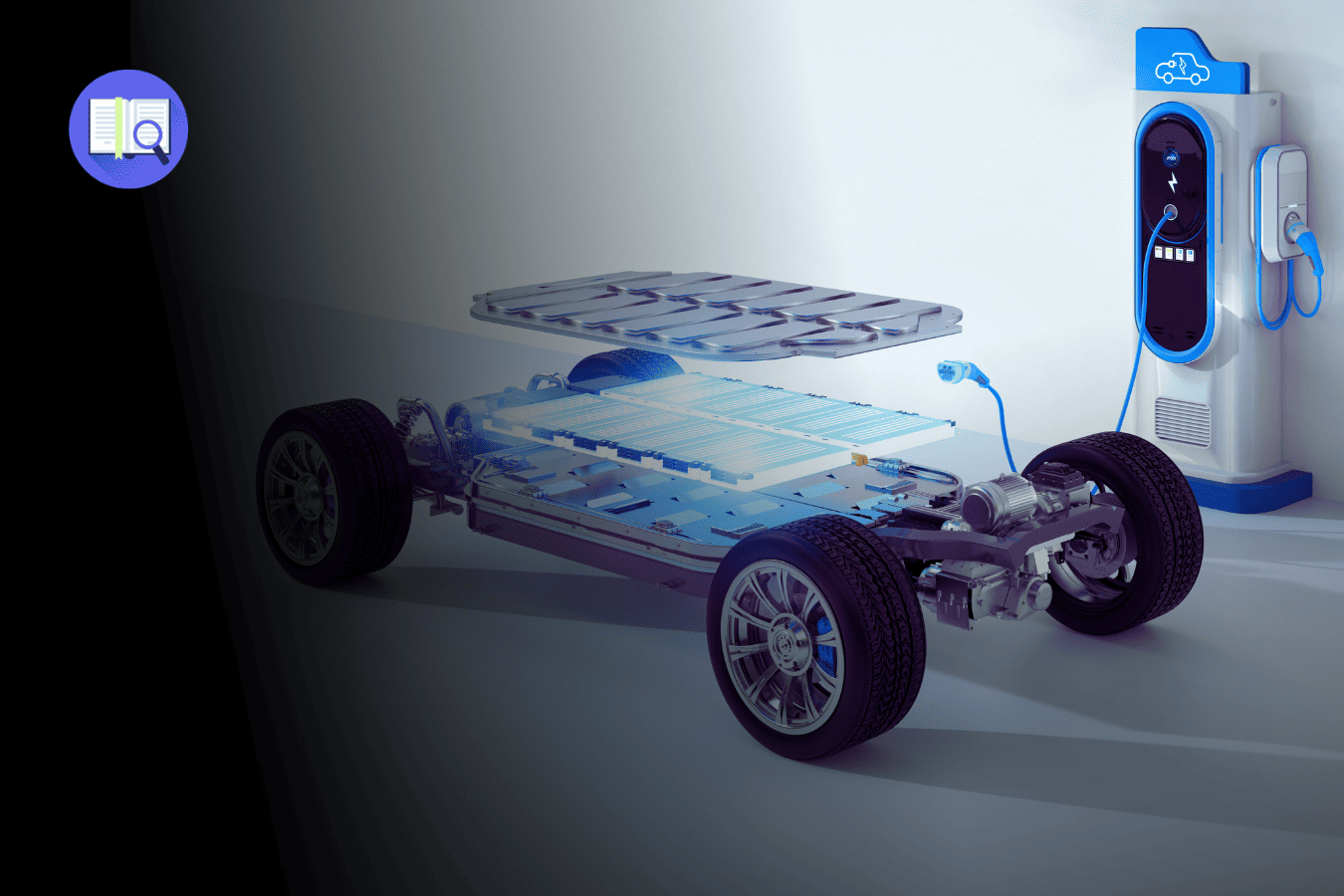
EV batteries don’t usually fail in dramatic ways. They don’t smoke, rattle, or suddenly refuse to start. Instead, they fade quietly – one mile of lost range at a time.
For fleet operators, that quiet fade is exactly what makes battery management tricky. Vehicles still run. Chargers still work. But availability starts slipping, charging frequency increases, and something feels … off. By the time the problem becomes obvious, it’s already expensive.
Here’s where proper EV fleet battery management comes in – it’s all about noticing patterns early and acting before they turn into downtime.
Let’s walk through it together.
EV fleet battery management is the ongoing process of monitoring battery health, usage, and charging behavior so fleets can:
Think of it like managing your fleet’s energy budget. You’re not just asking, “Is the battery full today?”
You’re asking, “How healthy will this battery be six months from now?”
According to the US Department of Energy, the battery can account for roughly 30–40% of an EV’s total vehicle cost, which makes it the single most valuable asset in the vehicle.
That’s not something you want to manage casually.
For individual drivers, battery degradation is annoying.
For fleets, it’s expensive.
Rental and leasing fleets face a few extra challenges:
The tricky part?
Battery problems rarely fail suddenly. They fade slowly, and by the time you notice, the damage is already done.
This term gets thrown around a lot, so let’s slow it down.
State of Charge is just how full the battery is right now. Think of it like a fuel gauge.
SoC changes constantly. It’s short-term.
State of Health is how much usable capacity the battery has compared to when it was new.
This is the long-term story – and it’s the one fleets should care about most.
Battery degradation is the gradual loss of capacity over time. It’s normal. Every EV experiences it.
What changes is how fast it happens.
Heat, charging habits, and usage patterns all influence degradation. The Department of Energy confirms that temperature and charging behavior are major contributors to long-term battery health.
Fleet operations tend to amplify the usual stressors.
Fast charging is incredibly useful – and absolutely necessary in many fleet situations.
But here’s the trade-off:
The key isn’t “never fast charge".
It’s don’t fast charge by default.
Cold reduces range temporarily. Heat causes permanent damage.
Prolonged exposure to high temperatures is one of the biggest contributors to battery degradation. That’s why EVs have thermal management systems, which regulate battery temperature.
If those systems aren’t maintained properly, battery health suffers quietly.
Keeping a battery fully charged all the time feels logical – but it’s not always healthy.
Fleets don’t need perfection here. They need reasonable guardrails.
Instant torque is fun. It’s also hard on batteries.
Frequent hard acceleration, high speeds, and heavy payloads all increase energy demand – and heat. Over time, that adds up.
This is where things often fall apart.
Many fleets check battery health only when something goes wrong. By then, it’s too late.
You don’t need everything. You need the right things.
Individually, these don’t say much. Together, they tell a story.
Battery issues don’t show up in snapshots.
They show up in patterns:
Without history, these look random. With history, they’re obvious.
Battery data should live with the vehicle record, not in random files or emails.
When battery history is tied to the asset, fleets can:
Memory fades. Records don’t.
This part matters. Because advice that ignores real-world pressure is useless.
This is about balance, not perfection.
Simple rules work best:
No manuals. No lectures. Just clarity.
Battery health isn’t just about charging.
Cooling systems, software updates, and inspections all play a role. Preventive maintenance keeps those supporting systems working the way they should.
Planning early is not pessimistic – it’s smart.
None of these mean “replace now". They mean start planning.
Sometimes replacing the battery makes sense. Sometimes it doesn’t.
Factors include:
Planning gives you options. Waiting removes them.
Emergency replacements cost more.
Planned replacements can be scheduled, budgeted, and aligned with downtime windows.
Surprises are expensive. Forecasts are not.
Battery warranties are helpful – but only if you have the paperwork.
Most warranties include:
Without proper records, even valid claims can stall.
The Department of Energy emphasizes that maintenance records play a key role in warranty discussions and long-term asset value.
Looking at vehicles one by one is reactive.
Fleets need a wider lens.
Group vehicles by:
This reveals which groups will likely need attention first.
You don’t need exact dates. You need windows.
Rough replacement timelines help with:
This turns battery replacement into a scheduled event – not a crisis.
At some point, spreadsheets stop being helpful.
That’s when things start slipping through the cracks.
The right system helps fleets:
Tools like FieldEx are used by EV fleets to manage battery-related information alongside asset history, maintenance activities, and costs – making battery replacement planning predictable instead of reactive.
Whether it’s FieldEx or another platform, the goal is the same: control instead of surprise.
EV batteries don’t fail suddenly.
They age – quietly, steadily, and predictably.
Fleets that track battery health early, manage charging smartly, and plan replacements ahead of time spend less on emergencies and keep more vehicles on the road.
Battery management isn’t about fear.
It’s about foresight.
Want to see FieldEx in action? Book a free demo, or simply get in touch. Let's chat!
Battery degradation is the gradual loss of usable capacity over time. It’s normal for all EVs, but good management can slow it down significantly.
Many EV batteries are designed to last several hundred thousand miles, depending on usage, charging habits, and environmental conditions (US DOE).
Frequent fast charging can accelerate degradation, but occasional use is fine – especially when balanced with slower charging.
Replacement planning should begin when range loss or alerts become consistent, not when the vehicle is already unreliable.
By monitoring trends in charging behavior, alerts, range, and service history – ideally at the asset level.

.avif)


This website and its content are the property of FieldEx and are protected by copyright laws. © 2026 FieldEx. Any redistribution or reproduction of part or all of the contents in any form is prohibited, except with our express written permission.
FieldEx Pte Ltd Singapore