


Let’s be honest for a second. The “gold rush” phase of the EV industry is over. We’re now in the “plumbing phase”.
The headlines have shifted from "explosive growth" to "reliability crisis”. If you manage a network of DC fast chargers, you know exactly what we’re talking about. Your dashboard is screaming Error 404, your technician is stuck in traffic, and you have a federal uptime mandate breathing down your neck.
Most people think the solution is just "better software”. But they usually buy the wrong kind. They buy a CPMS (charge point management system) hoping it will fix broken hardware. That’s like buying a smoke detector and hoping it puts out fires.
In this guide, we’re going to break down the Top 10 EV Charger Maintenance Software options on the market. We’ll explain the difference between the "brains" (CPMS) and the "hands" (O&M), and help you figure out which tool you actually need to keep those electrons flowing.
%20(1).png)
Here is the dirty little secret of the industry: Software can’t swap a broken connector.
A CPMS – like the ones listed below – is brilliant at processing payments and telling you a charger is offline … but it has no idea why. It doesn’t know if the screen was smashed by a baseball bat or if the modem is fried.
To fix physical infrastructure, you need O&M (operations & maintenance) software. This is the "execution layer” – it’s the tool that dispatches the truck, tracks the serialized spare part, ensures the technician has their NFPA 70E safety gear, and logs the repair for your warranty claim.
If you want federal funding (and who doesn’t?), you need to hit 97% uptime under the NEVI (National Electric Vehicle Infrastructure) program. You can't do that with spreadsheets.
We’ve categorized these into three buckets:

Most software in this industry is designed by people who have never held a multimeter. FieldEx is different. It’s the operating system for the energy transition, built specifically for the engineering and operations teams who actually have to fix the broken chargers. While other platforms focus on billing the driver, FieldEx focuses on dispatching the truck, tracking the serialized spare part, and ensuring your uptime data is audit-proof for federal reporting.

Driivz is a heavyweight champion when it comes to the "brains" of an EV network. Used by massive global utilities and oil companies, it is a robust platform for managing user access, payments and grid integration. If your primary headache is "how do I bill 50,000 drivers accurately", Driivz is a fantastic solution.
www.driivz.com
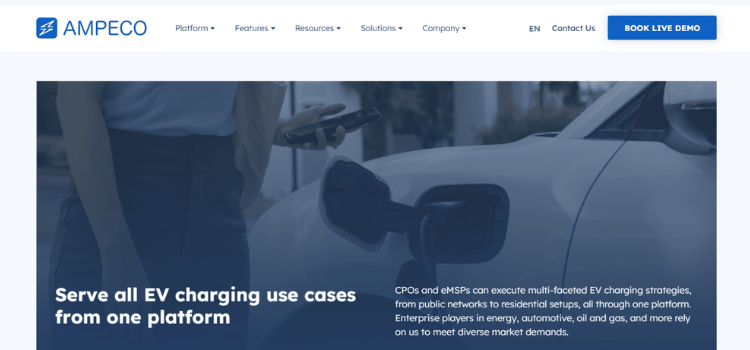
Want to start your own charging network that looks and feels like your brand? AMPECO is the best "white label" solution out there. They give you the backend infrastructure, but the mobile app the driver sees has your logo, your colors and your vibe. It’s the Shopify of EV charging.
www.ampeco.com

ChargePoint is the Apple of the EV world. They make the hardware, they make the software, and they run the network. It is a "walled garden" – seamless and easy to use, but you are locked into their ecosystem. For a grocery store or office building that just wants to offer charging without thinking about it, this is the gold standard.
Commercial cloud plans (like the CT4000 series) typically cost between $500-$700 port annually (prices vary by type, contract length and volume). They also offer "ChargePoint as a Service" bundles that include hardware and software for a single monthly fee.
www.chargepoint.com
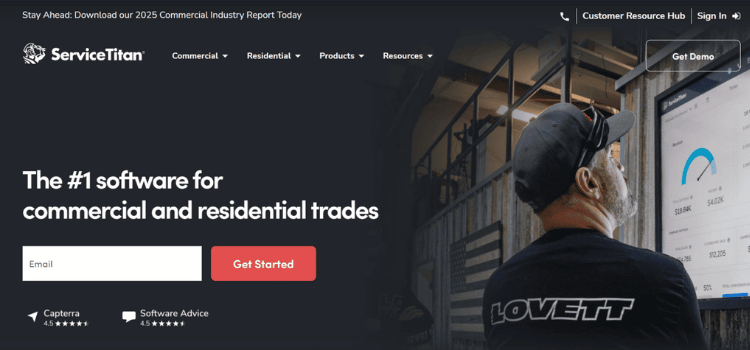
If you run a local electrical or HVAC business and have started installing Level 2 chargers in people’s garages, ServiceTitan is your best friend. It is the absolute king of residential field service. It excels at managing the "customer experience" – sending text updates, processing credit cards in the driveway, and upselling other home services.
www.servicetitan.com
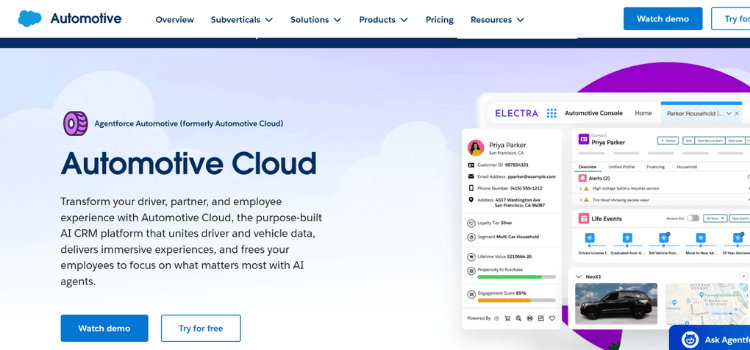
You know Salesforce. It’s the juggernaut of CRM. If you are a utility with 10,000 employees and an unlimited IT budget, their Field Service Lightning module is incredibly powerful. It is a blank canvas that can be customized to do literally anything – but be warned, you will need a team of consultants to paint that canvas.
www.salesforce.com
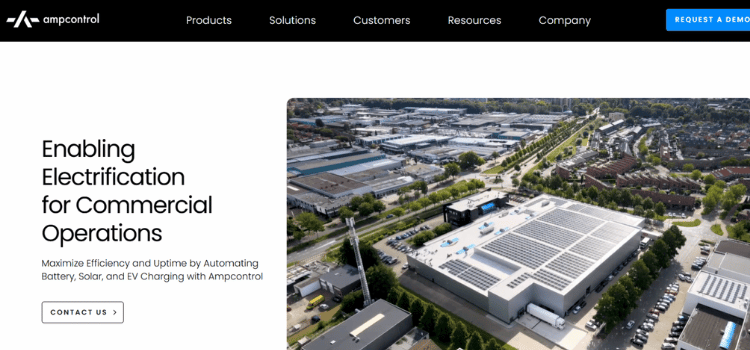
Ampcontrol isn't about public charging; it's about making sure your delivery trucks leave the depot with a full battery. Their software focuses on "smart charging" logic to ensure you don't blow up your utility bill by charging 50 buses at once during peak hours.
www.ampcontrol.io

If you’re tired of juggling alerts from five different CPMS dashboards and still not knowing who is actually going to fix the charger, ReliON is built for exactly that headache. It’s not a billing engine or a driver‑facing app; it’s an O&M‑first platform that sits between your chargers and your field teams, turning error codes into actionable service workflows.
www.relioncharging.com

ChargerHelp doesn’t bill drivers or run your network; it tracks who fixes what, when, and how. Think of it as the service‑history layer that sits underneath your CPMS. When a charger goes down, ChargerHelp captures the full service lifecycle – service request, dispatch status, technician notes, and repair details – so you can prove uptime, compliance, and warranty eligibility.
For NEVI‑style programs, this is critical. You can’t just say a charger was down “because of vandalism”; you need timestamps, photos, and technician notes tied to the asset. ChargerHelp syncs with CPMS providers (like Epic Charging) to enrich that data, so you’re not guessing what happened during an outage. It’s the “hands” to your CPMS’s “brains” when it comes to service data and reliability reporting.
ChargerHelp operates on a SaaS model, typically priced per charger or per site, with a demo‑driven sales process.
www.chargerhelp.com
Solidstudio is a licensed, enterprise‑grade CPMS that gives operators more control than pure SaaS platforms. It’s designed for public, commercial and fleet use cases, with a focus on control, scale and cost. If you’re a large CPO or energy company that wants to own your stack rather than rent it, Solidstudio is a strong fit.
This is the “brains” layer – handling billing, user access and grid integration – while you still need an O&M layer (like FieldEx or ReliON) to manage the “hands”.
Solidstudio is typically sold as a licensed platform with per‑site or per‑charger pricing, plus implementation and support fees.
www.solidstudio.io
Still not sure how to pick the right software for your biz? Here’s a simple checklist you can use to assess suitability.
If you are just a service company fixing other people's stuff, you need FieldEx or ServiceTitan. You don't need a billing platform (CPMS).
If you are a CPO (Charge Point Operator) charging drivers $0.45/kWh, you absolutely need a CPMS like Driivz, AMPECO or ChargePoint to handle the money.
If you took NEVI money, you need an O&M layer (like FieldEx) that integrates with your CPMS. The CPMS spots the error; FieldEx documents the fix and generates the compliance report.
You will hear marketing people use these terms interchangeably. They are not the same.
FieldEx is specifically designed to log those "excluded" events. If a drunk driver knocks over your pedestal, that shouldn't count against your reliability score – but only if you have the photos and police report tagged to the asset in your software.
The EV industry is maturing fast. We’re moving from the era of “installation” to the era of “operation.” The companies that win in the next decade won’t be the ones with the flashiest press releases. They’ll be the ones with the highest uptime, the cleanest compliance records, and the most efficient field teams.
That means you need both brains and hands.
CPMS platforms like Driivz, AMPECO, ChargePoint and Solidstudio are fantastic at managing the “brains” of your network – billing, access and grid integration. But they can’t fix a broken connector, dispatch a technician, or prove to NEVI that an outage was caused by vandalism, not negligence. That’s where O&M‑first tools like FieldEx, ReliON, ChargerHelp and Ampcontrol come in.
Stop managing million‑dollar assets with a spreadsheet. Get the right tool for the job.
Think of the CPMS (Charge Point Management System) as the "brains" – it handles billing, user apps, and turning the charger on/off. O&M (operations & maintenance) software is the "hands" – it manages the physical repairs, spare parts inventory, and technician scheduling. You generally need both.
You can try, but it’s painful. Most CPMS platforms treat a "broken charger" as a simple error code. They lack the workflows to dispatch a truck, track which serialized power module was swapped, or guide a technician through a high-voltage safety checklist.
To keep your federal funding, you need to prove 97% uptime. Your software must be able to automatically tag downtime events with specific "Cause Codes" (like Grid Power Outage or Vandalism). If you can’t prove why a charger was down, the government assumes it was your fault, and you get penalized.
Generic tools are great for plumbing or HVAC, but they struggle with EV infrastructure. A generic CMMS doesn’t know the difference between a CCS1 and a NACS connector, and it won’t have the specialized taxonomy for EV error codes or OCPP alerts.
Availability is a snapshot: "Is this charger working right now?"
Uptime is a historical calculation: "What percentage of time was this charger working over the last year?" Crucially, Uptime allows you to subtract "excluded events" (like a car smashing into the unit) from the calculation.
These are specific scenarios where a charger is down, but it isn't the operator's fault. Common examples include utility service interruptions, natural disasters, and vandalism. Your software needs to capture evidence (like photos of cut cables) to prove these events occurred.
No. FieldEx integrates with them. It sits underneath your CPMS. For example, when Driivz detects a critical error, it fires a signal to FieldEx, which automatically creates a work order and dispatches a technician.
High-voltage DC chargers can kill you if handled incorrectly. Good O&M software has "gatekeeping" logic that prevents a technician from accepting a work order unless their specific safety certifications (like NFPA 70E) are uploaded and current.
If you have 10 chargers, you can probably survive with a spreadsheet (and a prayer). But once you scale past 50 assets – or if you have a single NEVI-funded site – the administrative burden of tracking warranties, parts, and compliance reports becomes impossible to manage manually.

.avif)


This website and its content are the property of FieldEx and are protected by copyright laws. © 2026 FieldEx. Any redistribution or reproduction of part or all of the contents in any form is prohibited, except with our express written permission.
FieldEx Pte Ltd